
Floral
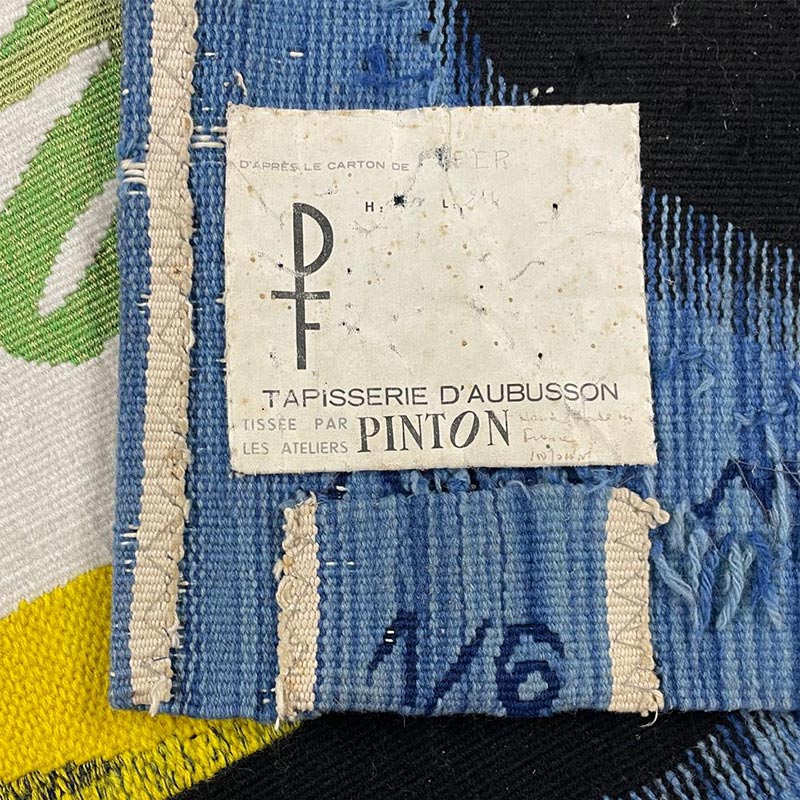
Material: Handwoven wool tapestry by Atelier Pinton, Aubusson, France
Date: 1970s
Edition: 1/6
Dimensions: 64 x 85 in, 164 x 215 cm
Condition: Perfect Condition
Provenance: Private French Collection
Detailed information
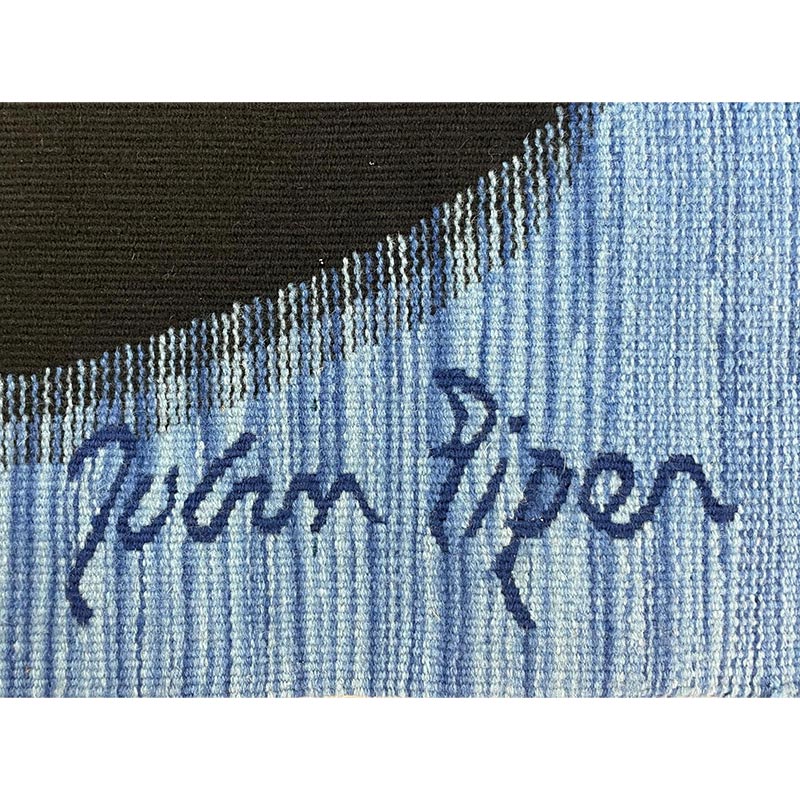
John Piper “Floral” Tapestry
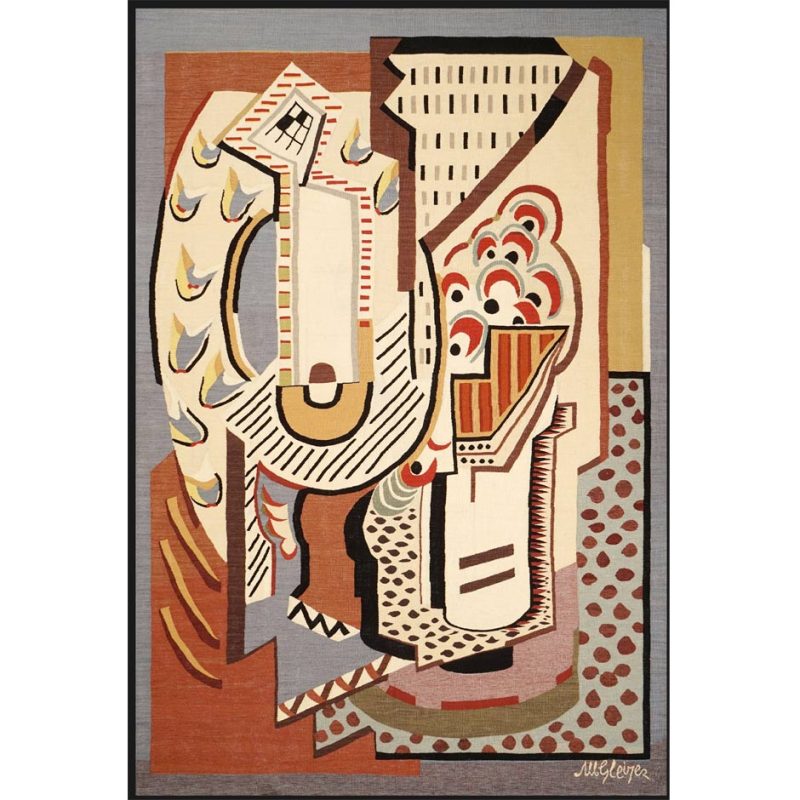
Floral by John Piper illustrates the artist’s distinctive approach to tapestry as an extension of his broader exploration of color, structure, and the decorative arts. Woven during the 1970s by Atelier Pinton in Aubusson, the work emerged from the dialogue between Piper’s modernist visual language and the expertise of one of France’s important tapestry workshops.
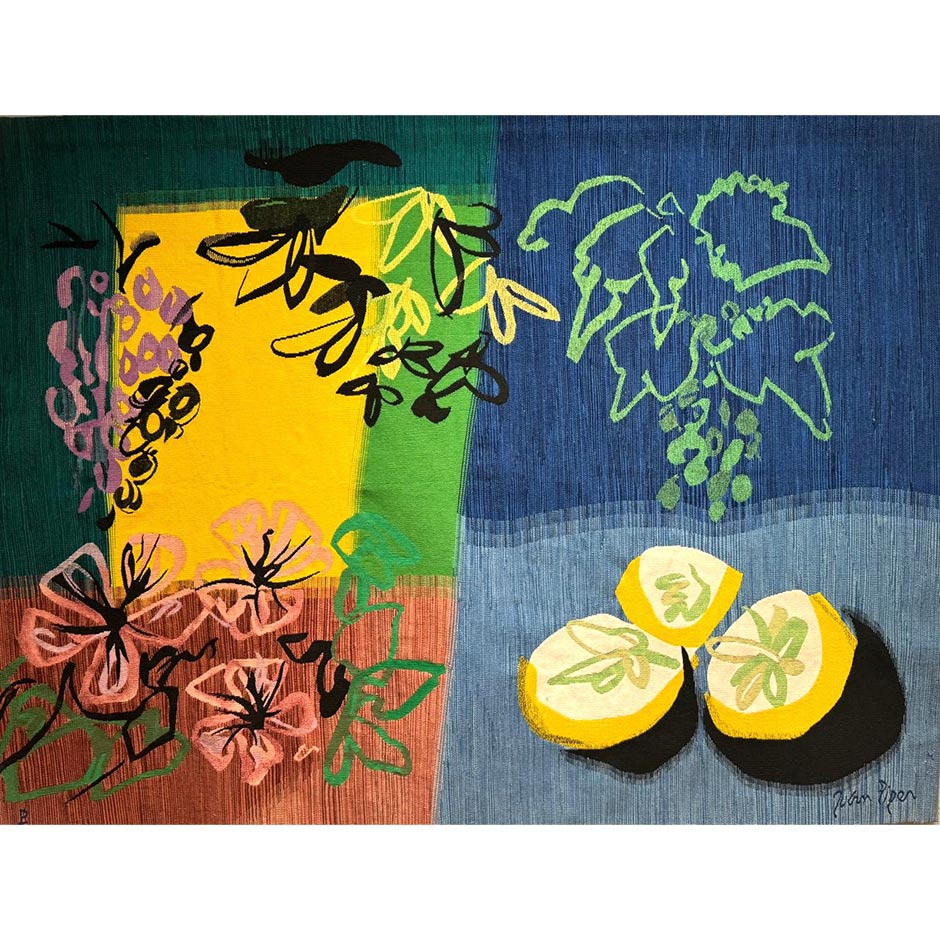
The composition brings together two vocabularies that recur throughout Piper’s work. Broad geometric fields divide the surface into a rhythmic arrangement of saturated colors, while recognizable natural forms—a three-part lemon and a cluster of grapes—introduce the vocabulary of still life. Rather than opposing abstraction and representation, Piper allows the two to coexist, with the fruit becoming part of the underlying architecture of the composition.
This construction reflects Piper’s early engagement with abstraction and Cubism, but also his extensive work across other media. His experience with stained glass is particularly resonant: strong outlines, clearly articulated areas of color, and the relationship between individual forms all contribute to a composition conceived through structure as much as imagery.
Translating these qualities into tapestry required a different material language. At Atelier Pinton, Piper’s graphic forms were interpreted through weaving, replacing the immediacy of paint with the density and texture of wool. The textile surface introduces subtle tonal shifts and a tactile depth while preserving the clarity of the original composition. The result demonstrates how weaving could transform rather than simply reproduce an artist’s design.
Piper’s collaborations with tapestry workshops belong to a broader twentieth-century movement in which modern artists worked closely with skilled weavers to reconsider tapestry as a contemporary artistic medium. His relationship with Aubusson and Atelier Pinton forms an important part of this history, bringing together modernist experimentation and a centuries-old French weaving tradition.
Within this context, Floral is particularly representative of Piper’s ability to move between disciplines. Painting, stained glass, stage design, architecture, and textile art all informed his understanding of color and space. Here, those interests converge in a woven composition in which geometric construction, organic imagery, and material texture remain in carefully measured balance.
Detailed information
John Piper “Floral” Tapestry
Floral by John Piper illustrates the artist’s distinctive approach to tapestry as an extension of his broader exploration of color, structure, and the decorative arts. Woven during the 1970s by Atelier Pinton in Aubusson, the work emerged from the dialogue between Piper’s modernist visual language and the expertise of one of France’s important tapestry workshops.
The composition brings together two vocabularies that recur throughout Piper’s work. Broad geometric fields divide the surface into a rhythmic arrangement of saturated colors, while recognizable natural forms—a three-part lemon and a cluster of grapes—introduce the vocabulary of still life. Rather than opposing abstraction and representation, Piper allows the two to coexist, with the fruit becoming part of the underlying architecture of the composition.
This construction reflects Piper’s early engagement with abstraction and Cubism, but also his extensive work across other media. His experience with stained glass is particularly resonant: strong outlines, clearly articulated areas of color, and the relationship between individual forms all contribute to a composition conceived through structure as much as imagery.
Translating these qualities into tapestry required a different material language. At Atelier Pinton, Piper’s graphic forms were interpreted through weaving, replacing the immediacy of paint with the density and texture of wool. The textile surface introduces subtle tonal shifts and a tactile depth while preserving the clarity of the original composition. The result demonstrates how weaving could transform rather than simply reproduce an artist’s design.
Piper’s collaborations with tapestry workshops belong to a broader twentieth-century movement in which modern artists worked closely with skilled weavers to reconsider tapestry as a contemporary artistic medium. His relationship with Aubusson and Atelier Pinton forms an important part of this history, bringing together modernist experimentation and a centuries-old French weaving tradition.
Within this context, Floral is particularly representative of Piper’s ability to move between disciplines. Painting, stained glass, stage design, architecture, and textile art all informed his understanding of color and space. Here, those interests converge in a woven composition in which geometric construction, organic imagery, and material texture remain in carefully measured balance.