
Adolph Gottlieb
Modern Masters Tapestries selection by Didier Marien
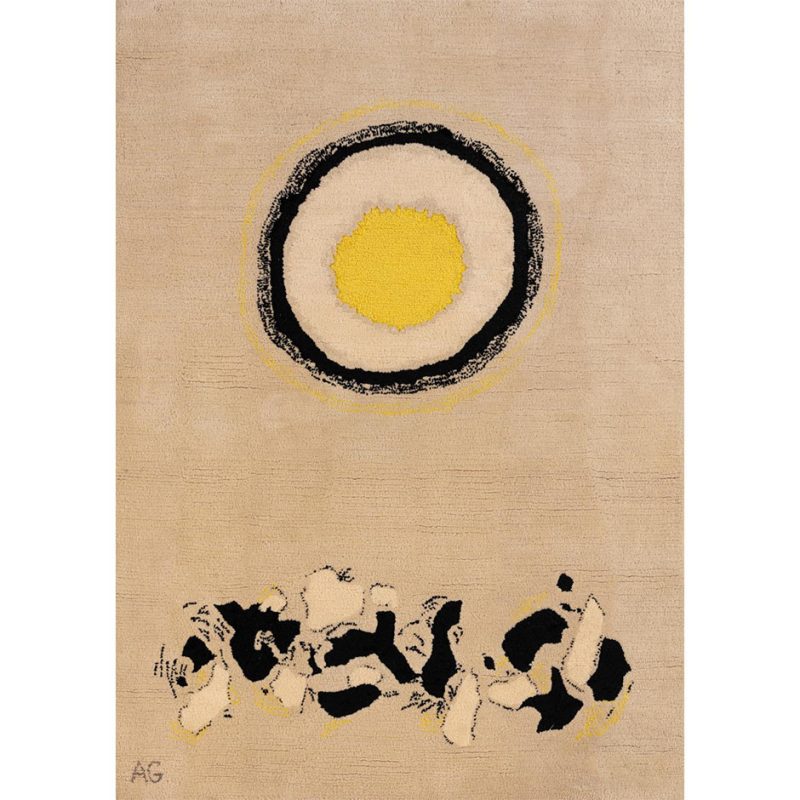
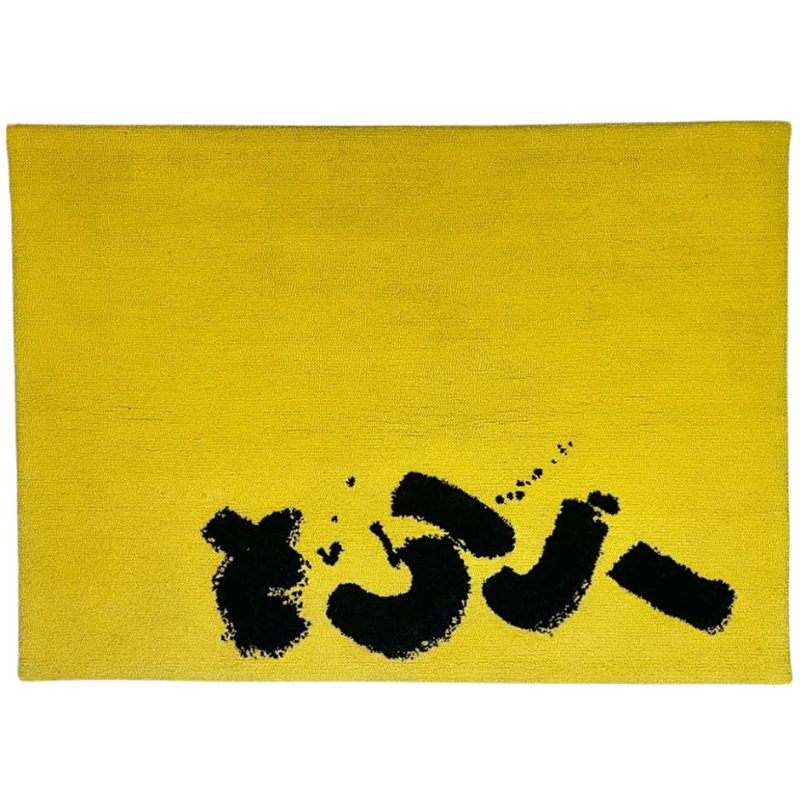
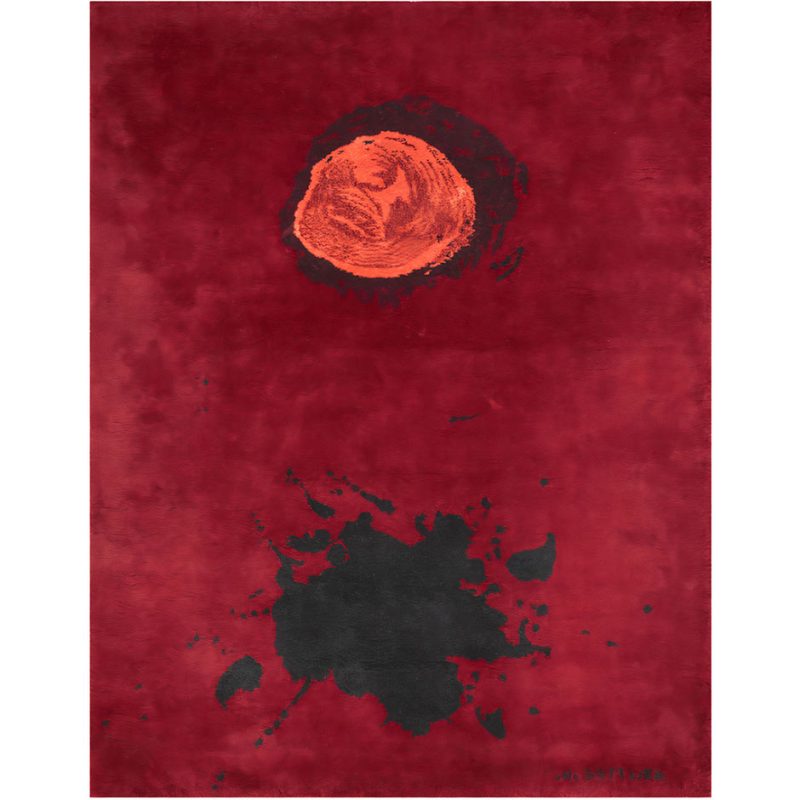
Learn more about the artist
Adolph Gottlieb Rugs and Tapestries : Early Life and Artistic Influences
Adolph Gottlieb (1903-1974) was a prominent American painter who played a significant role in the development of Abstract Expressionism. His unique style, characterized by bold, gestural forms and enigmatic imagery, resonated with the zeitgeist of the post-World War II era, capturing the complexities and anxieties of the modern world.
Born in New York City to Jewish immigrant parents, Gottlieb grew up immersed in the vibrant cultural landscape of the city. From an early age, he demonstrated a passion for art, studying at the Educational Alliance, The Art Students League, and the Académie de la Grande Chaumière in Paris. His artistic development was further influenced by the works of European modernists such as Picasso, Matisse, and Surrealists like Miró and Dalí.
The Emergence of Abstract Expressionism
In the aftermath of World War II, Gottlieb found himself disillusioned with the traditional modes of representation and sought new avenues for artistic expression. Inspired by the emerging Abstract Expressionist movement, he began to create paintings that were characterized by their bold, gestural forms, vibrant colors, and enigmatic imagery.
Signature Artistic Style
Gottlieb’s paintings often featured large, biomorphic shapes, reminiscent of masks or symbols, floating on a monochromatic background. These forms were often accompanied by cryptic symbols or text, such as “Eyes of Oedipus” or “Blast,” further adding to the enigmatic quality of his works.
The Picto-Textural Period
In the 1950s, Gottlieb developed a new style called the “Picto-Textural Period,” in which he incorporated textured surfaces and loose brushwork into his compositions. This shift reflected his growing interest in the relationship between painting and sculpture, as well as his desire to create works that were more tactile and physically engaging.
Later Years and Impact
Gottlieb remained active throughout the 1960s and continued to evolve his artistic style. He explored different mediums, including sculpture and printmaking, and collaborated with other artists on various projects. His work was widely exhibited and recognized, and he received numerous accolades, including the Gran Premio at the São Paulo Bienal in 1963.
Gottlieb’s legacy as a pioneer of Abstract Expressionism endures. His bold and expressive paintings continue to captivate audiences worldwide, offering a profound reflection on the human condition and the mysteries of existence.
Adolph Gottlieb’s contributions to the world of art are undeniable. His innovative approach to abstraction, his exploration of the relationship between painting and language, and his ability to convey profound emotions through his artwork have left an indelible mark on the history of art.