
Alexander Calder
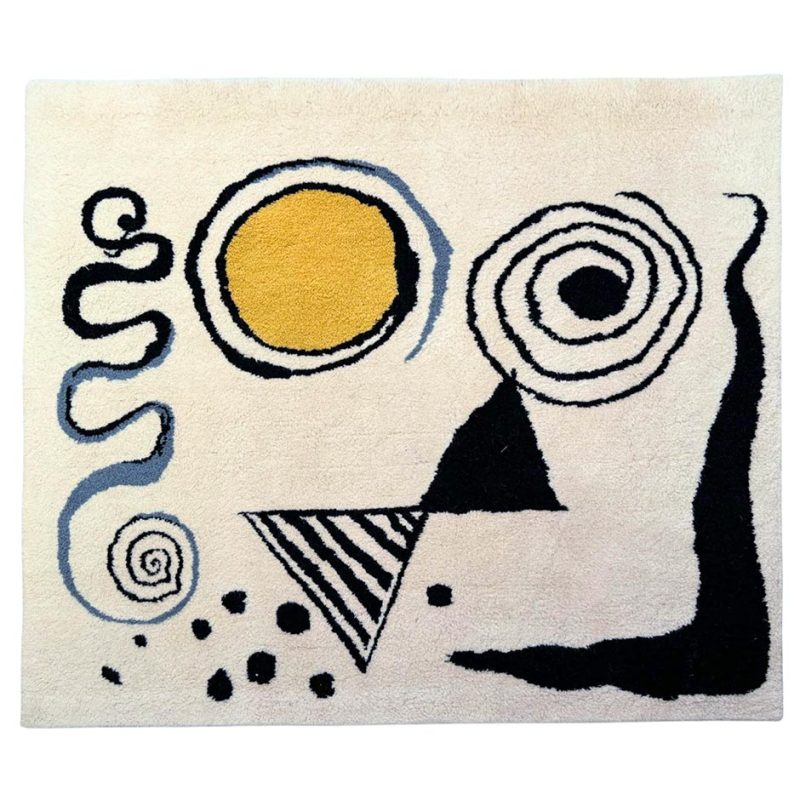
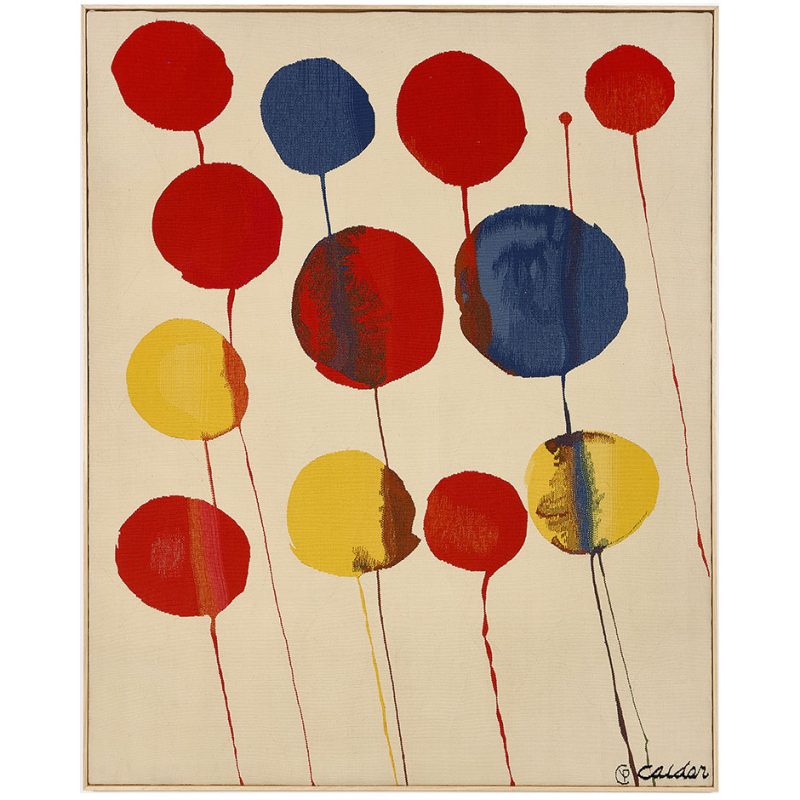
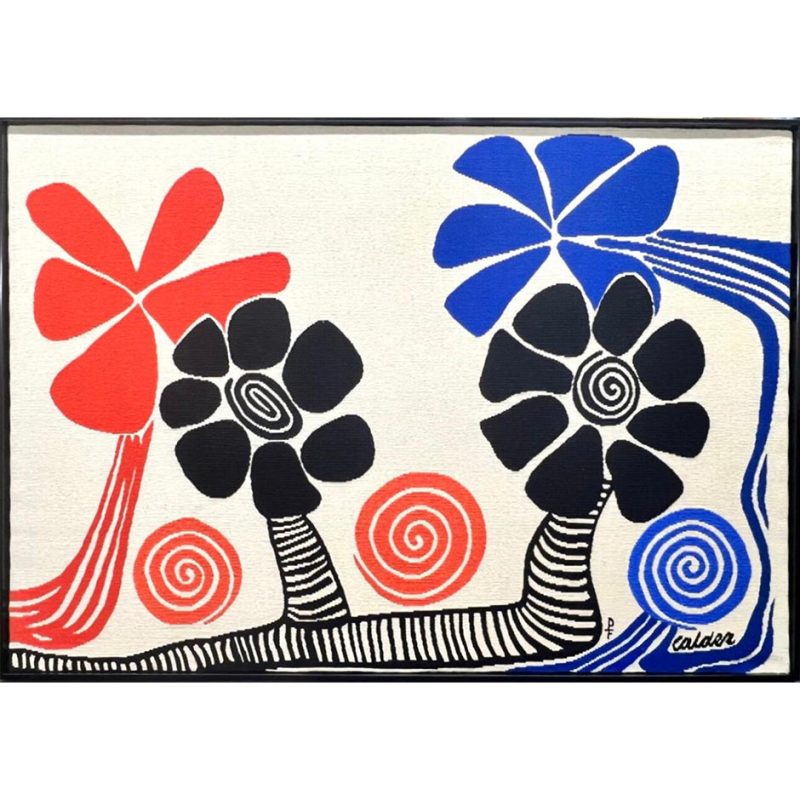
Modern Masters Tapestries selection by Didier Marien







Learn more about the artist
Alexander Calder Tapestries
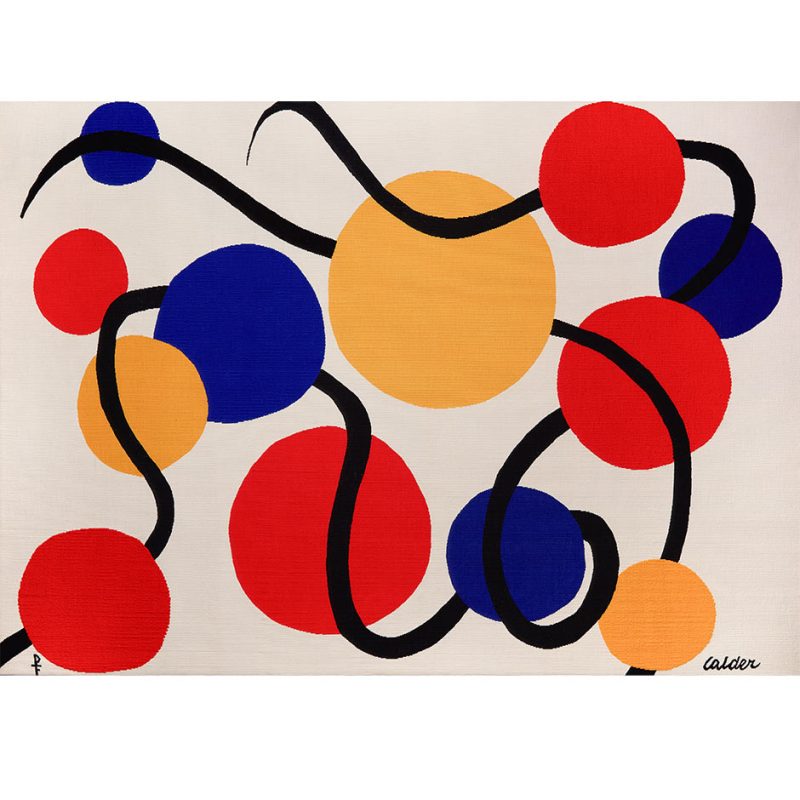
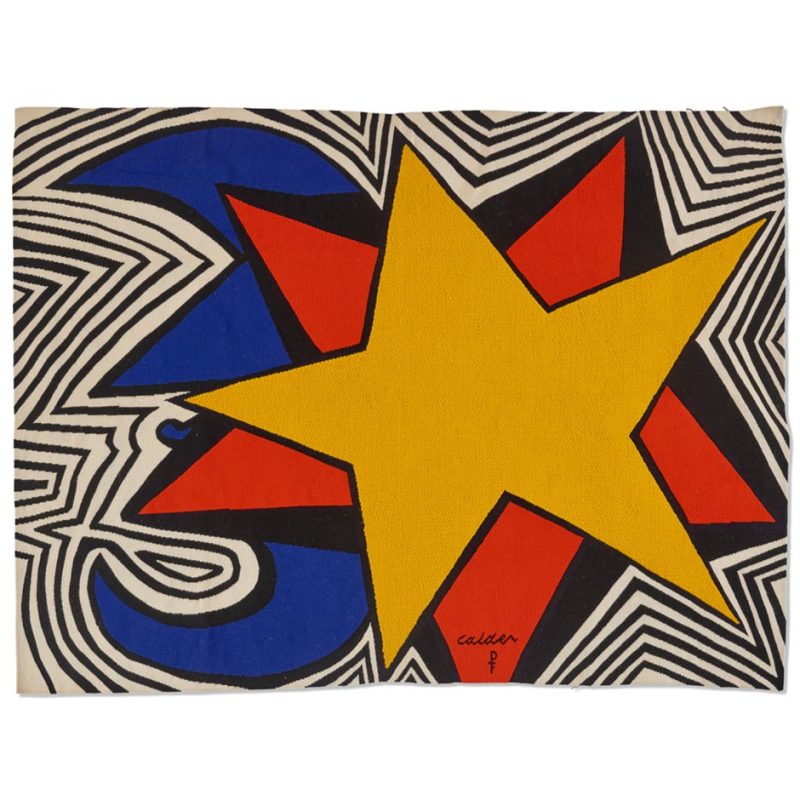
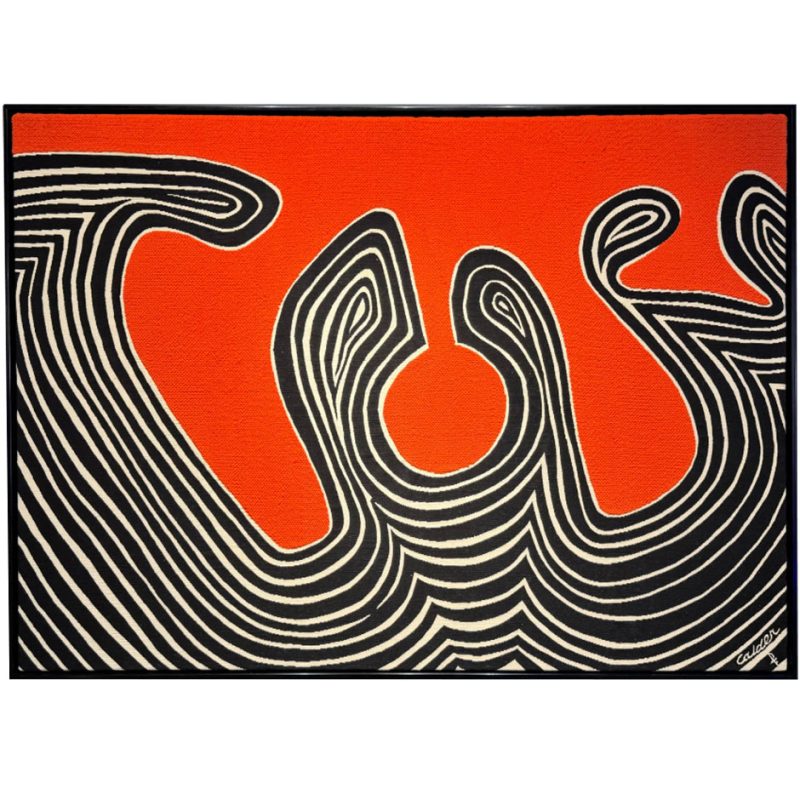
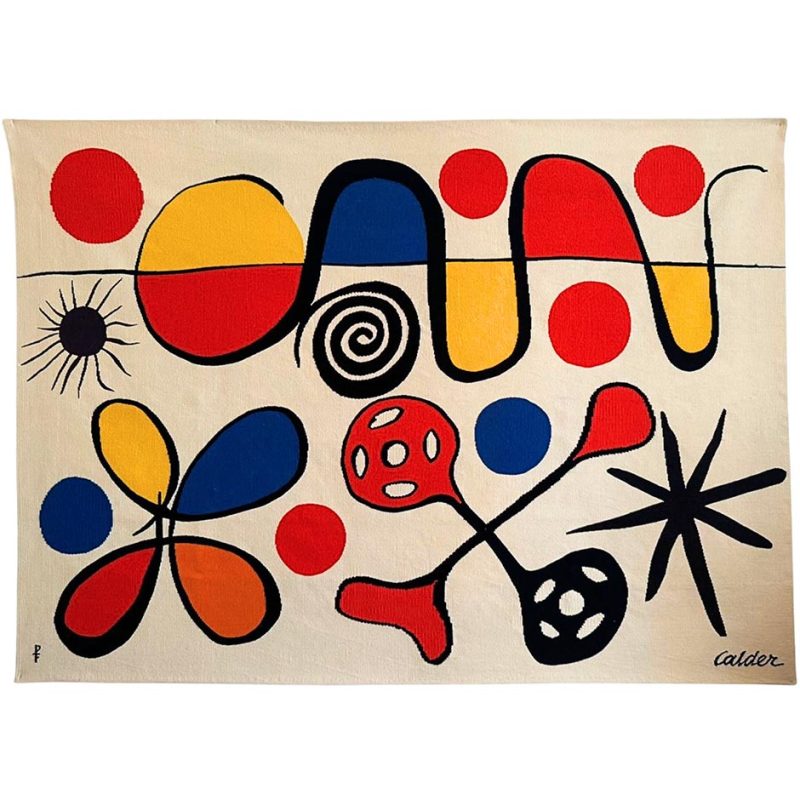
The Modern Masters Tapestries Gallery is delighted to present a remarkable collection of tapestries, imbued with the artistic brilliance of Alexander Calder.
Alexander Calder, born in 1898 and passing in 1976, was an American sculptor of international renown. After pursuing mechanical engineering studies and working various industry jobs, he decided to pursue art and enrolled in painting classes at the Art Students League of New York.
Calder’s fascination with the circus manifested at a young age, leading him to create the Calder Circus in 1926. His first solo exhibition took place in New York in 1928, and his encounter with Piet Mondrian in 1930 marked a pivotal moment in his artistic journey. Inspired by Mondrian, Calder embraced abstract art and began experimenting with color in his sculptures, moving away from figurative representation.
In 1931, Calder joined the group “Abstraction-creation,” alongside Piet Mondrian, Hans Arp, and Robert Delaunay. This association marked the beginning of his exploration of mobiles, his signature kinetic sculptures. These intricate creations featured an assemblage of mobile and independent elements set in motion by air currents or electric motors, a concept that Marcel Duchamp aptly termed “Mobiles.”
Alexander Calder’s artistic brilliance was widely recognized in the United States from 1933 onwards. The 1930s proved to be a period of exceptional productivity and innovation for Calder. He refined his abstract moving compositions, created “La Fontaine de Mercure,” which was exhibited alongside Picasso’s “Guernica” at the Spanish Pavilion of the 1937 International Exhibition, and had his first retrospective exhibition at the George Walter Vincent Smith Gallery in Springfield in 1938.
Alexander Calder’s artistic legacy is deeply revered, with numerous prestigious art institutions hosting retrospective exhibitions of his work. These include MoMA (curated by James Johnson Sweeney and Marcel Duchamp in 1943), the Guggenheim Museum (1964), the Museum of Contemporary Art, Chicago (1974), and Tate Modern (November 2015 – April 2016).