
Joan Miró
Modern Masters Tapestries selection by Didier Marien

Learn more about the artist
Joan Miró Tapestries and Rugs
Joan Miró’s foray into tapestry was more than an exploration of textile art—it was a revolutionary dialogue between modernism and tradition. His journey into weaving began in the 1960s, when he encountered the legendary workshops of Aubusson, a UNESCO-listed center of textile artistry dating back to the Middle Ages. Intrigued by the possibility of transforming his vibrant, abstract compositions into woven masterpieces, Miró began collaborating with master weavers to create some of the most striking textile adaptations of modernist painting.
Aubusson: Where Modernism Meets Tradition
Aubusson had long been synonymous with excellence in tapestry-making, but it was Miró—along with contemporaries like Pablo Picasso and Alexander Calder—who helped bridge the gap between traditional craftsmanship and avant-garde art. Rather than merely reproducing his paintings, Miró worked closely with the artisans, experimenting with texture, depth, and the interplay of color to create textiles that stood as original works of art.
One of the most famous results of this collaboration was The World Trade Center Tapestry (1974), a monumental piece commissioned for the Twin Towers in New York. Though tragically destroyed in 9/11, this tapestry exemplified Miró’s ability to translate his expressive brushwork into a new medium, retaining the energy and spontaneity of his paintings while embracing the tactile richness of woven fabric.
A Lasting Influence
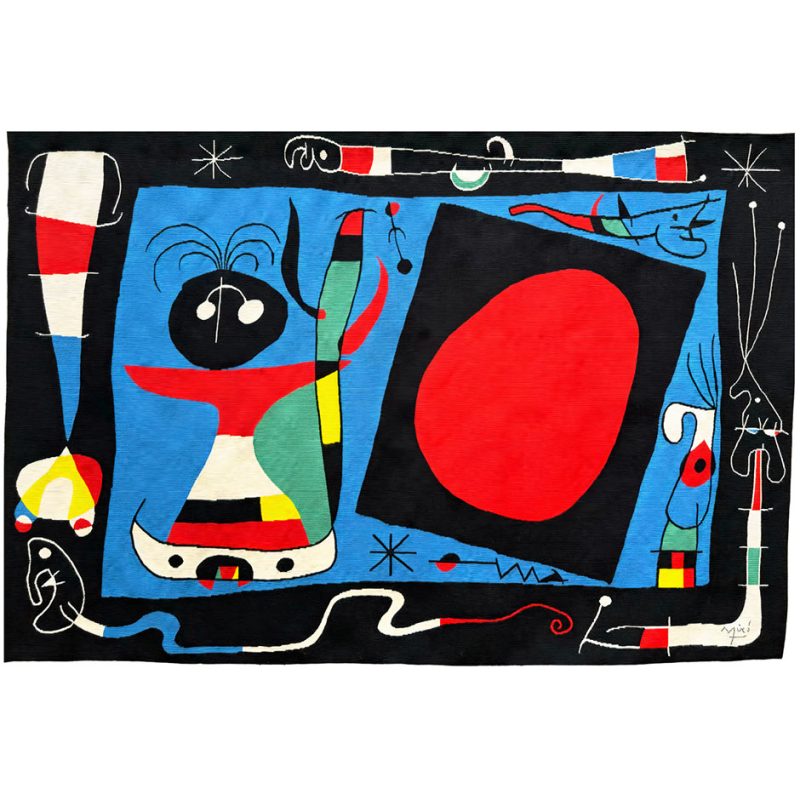
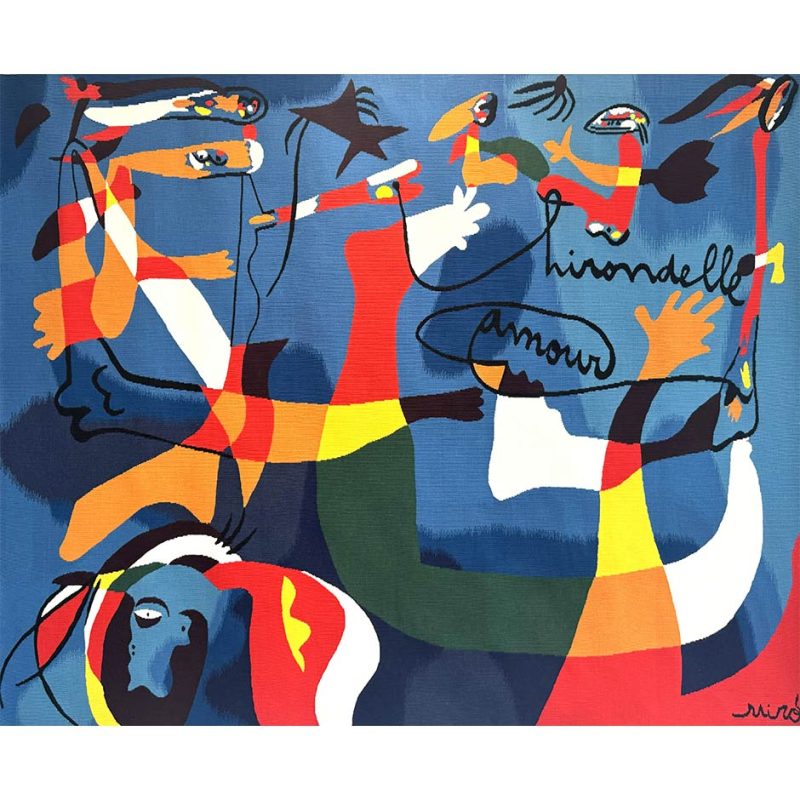
Miró’s commitment to tapestry endures today through ongoing projects that continue to celebrate his vision. The recent collaboration between ADAGP, the Mobilier National, and Pinton Manufacture has reintroduced L’Hirondelle Amour and Femme au miroir in a limited edition, reaffirming Miró’s status as a pioneer of modern tapestry. His influence extends beyond his own work, inspiring new generations of artists and weavers to explore the limitless possibilities of textile art.
By championing Miró’s woven works, Boccara Gallery proudly contributes to the ongoing legacy of Aubusson craftsmanship, ensuring that the artist’s bold, poetic vision continues to thrive in the world of contemporary tapestry.