
Le Corbusier
Modern Masters Tapestries selection by Didier Marien
Learn more about the artist
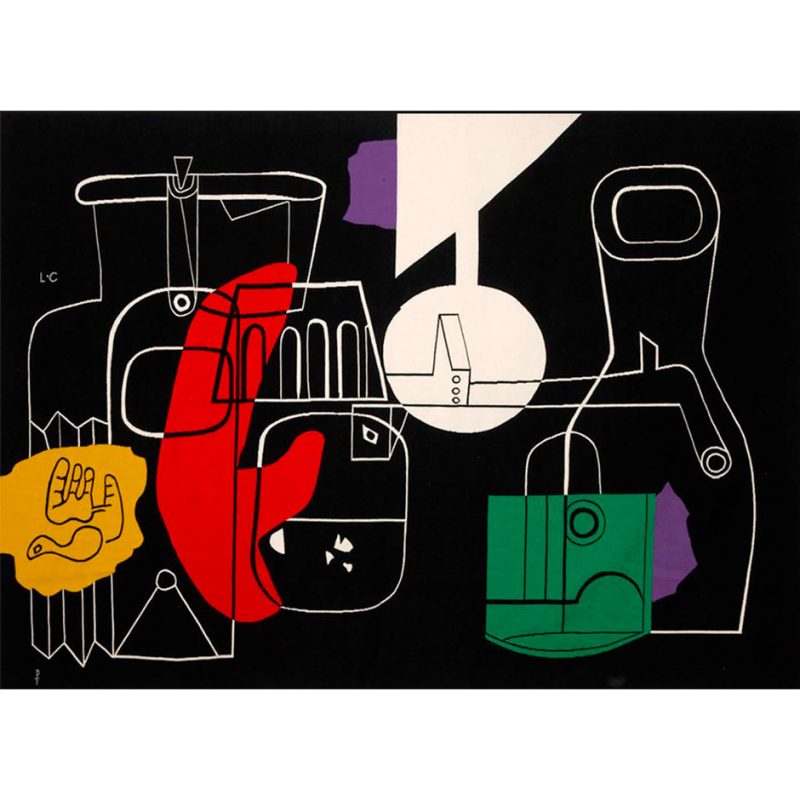
Le Corbusier Tapestries and Rugs
The Modern Masters Tapestries Gallery proudly presents a collection of tapestries and rugs by Le Corbusier, a highly influential figure who epitomized the spirit of modern art and design. Renowned as the “Father of Modernism,” Le Corbusier’s vision extended beyond architecture, encompassing painting, urban planning, and textiles.
Born Charles-Edouard Jeanneret in Switzerland in 1887, Le Corbusier was a self-taught artist whose journey began with engraving and chiseling at the Art School in Jura. His passion for design and architecture led him to embrace the burgeoning modernist movement, rejecting the excesses of traditional ornamentation and embracing a style characterized by elemental geometric forms and industrial materials.
In 1926, Le Corbusier laid the foundation for modern architecture with his Five Points of Architecture, emphasizing stilts, roof decks, open plan layouts, original facades, and window sills. This innovative approach revolutionized the built environment, creating spaces that were both functional and aesthetically pleasing.
Le Corbusier’s influence extended beyond architecture, as he co-founded the International Congress of Modern Architecture (CIAM) in 1928, bringing together leading architects and urban planners to discuss and advance modernist principles. His concept of “Unité d’Habitation,” or housing units of standard size, addressed the pressing social concerns of the time by introducing innovative housing solutions that incorporated essential amenities under a single roof.
Le Corbusier’s artistic vision encompassed all aspects of design, including textiles. He believed that tapestries, which he termed “the mural of the modern age,” held the potential to become an integral part of architectural compositions. Unlike paintings, tapestries, according to Le Corbusier, should not be confined to the upper walls but should be placed at human height and even touch the floor, integrating seamlessly into the overall design concept.
Le Corbusier’s tapestries, often referred to as “Muralnomads”, were designed for flexibility and portability, emphasizing their ability to be easily detached, rolled, and carried. This functional aspect reflects Le Corbusier’s commitment to creating art that seamlessly integrates with the realities of modern life.
Throughout his prolific career, Le Corbusier’s architectural and design innovations left an indelible mark on the 20th century, inspiring generations of architects, designers, and artists. His tapestries, in particular, stand as testaments to his holistic approach to design, demonstrating how textiles can elevate architectural spaces and serve as powerful visual elements in their own right.
The Modern Masters Tapestries Gallery is honored to showcase Le Corbusier’s tapestries, providing a unique opportunity to experience his art in a context that aligns with his vision of seamlessly blending art and architecture into a cohesive whole. These tapestries not only embody the essence of modern design but also serve as a lasting tribute to Le Corbusier, a visionary artist who reshaped our understanding of the world around us.