
Man Ray
Modern Masters Tapestries selection by Didier Marien

Learn more about the artist
Man Ray Tapestries
Man Ray Tapestries represent a lesser-known yet significant facet of the artist’s oeuvre, highlighting his boundless creativity beyond photography and Surrealist art. As a true Renaissance artist, Man Ray explored painting, sculpture, filmmaking, and textile design, demonstrating his unique vision and the limitless possibilities of artistic expression across disciplines. By venturing into textiles, he showed that true creativity transcends boundaries and flourishes in unexpected forms, leaving a lasting legacy that continues to inspire artists today.
Early Exploration: Tapestry (1911)
Man Ray’s first documented foray into textile art was Tapestry (1911), a patchwork of wool rectangles believed to have been crafted from fabric remnants sourced from his father’s tailoring shop. This work, preserved today in the Centre Pompidou in Paris, embodies the Dadaist ethos by transforming humble, everyday materials into art. It also illustrates his early fascination with unconventional mediums and his ability to challenge traditional artistic conventions.
The Influence of Art Deco and Modernist Textiles
Man Ray’s exploration of textiles was also shaped by the Art Deco movement of the 1920s and his interest in tactile and decorative arts. His designs from this period experimented with geometric patterns, bold colors, and abstract forms, cultivating a unique visual language that resonated with the modernist aesthetic of the era. These explorations would later culminate in his celebrated Revolving Doors series.
Revisiting Textiles: The Revolving Doors Series and Atelier 3 (1973)
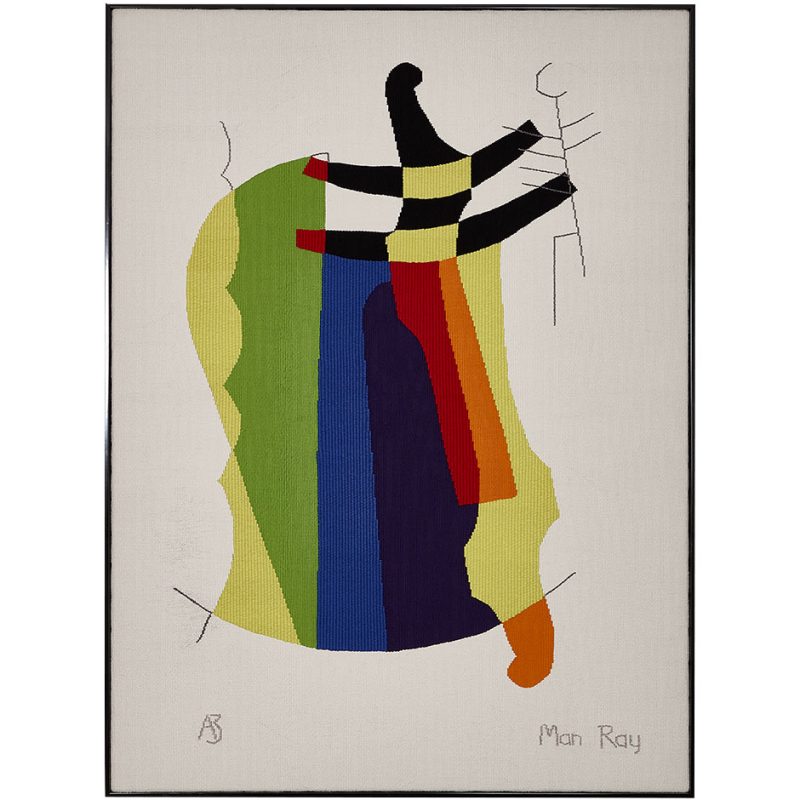
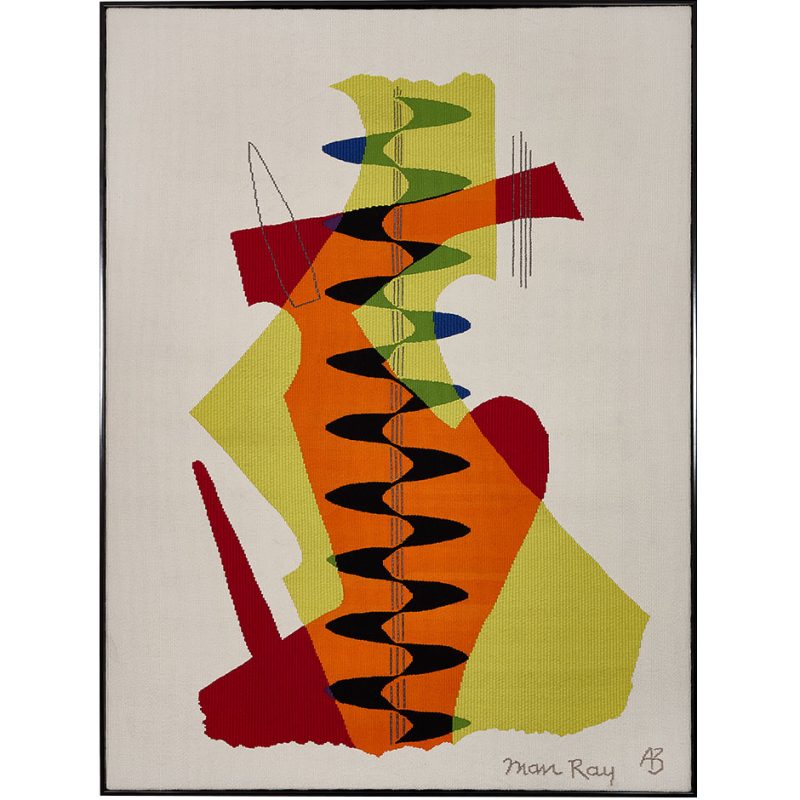
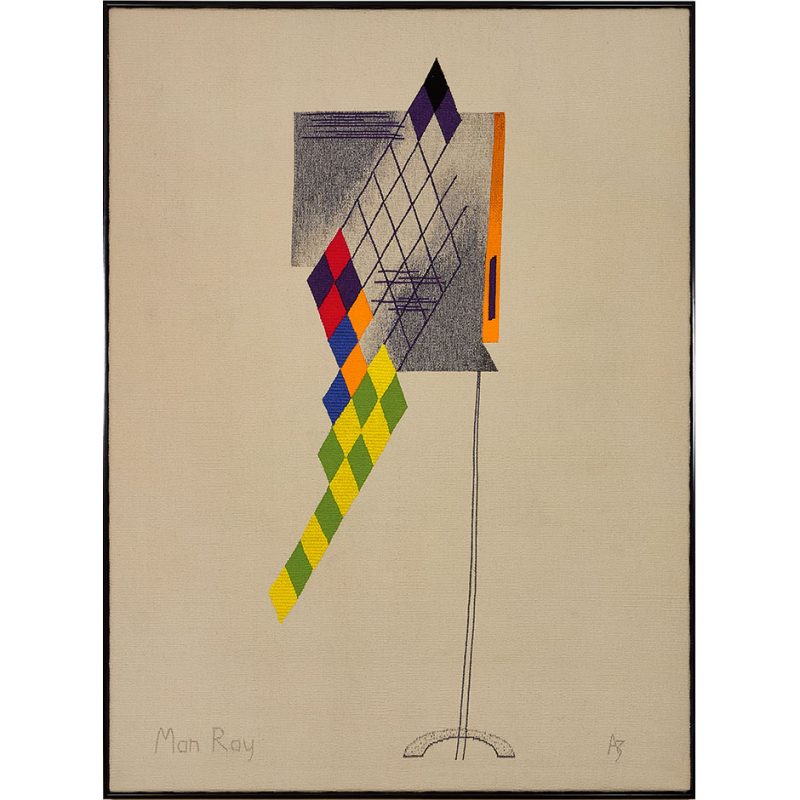
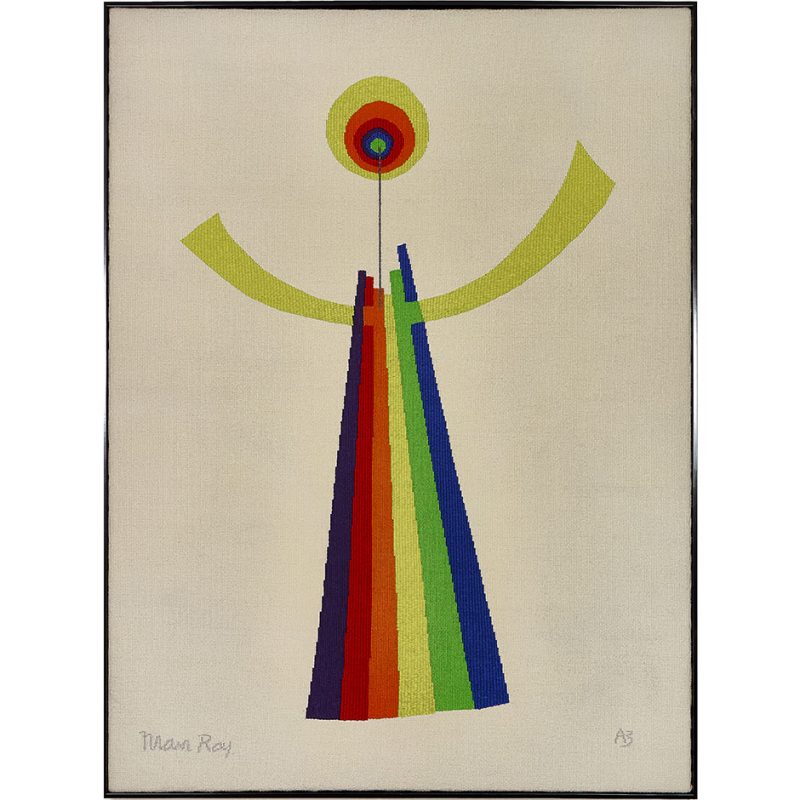
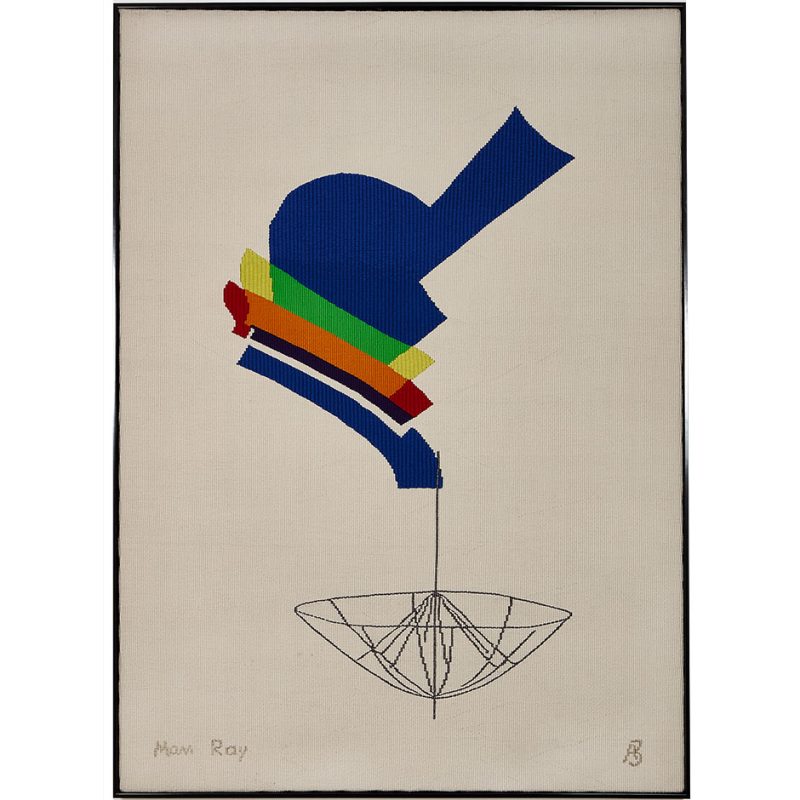
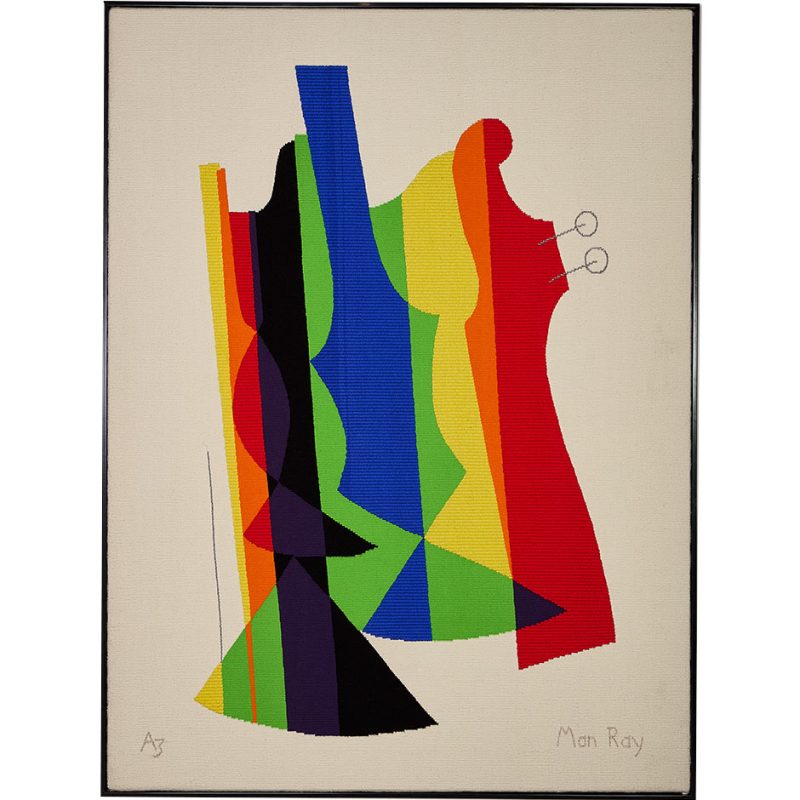
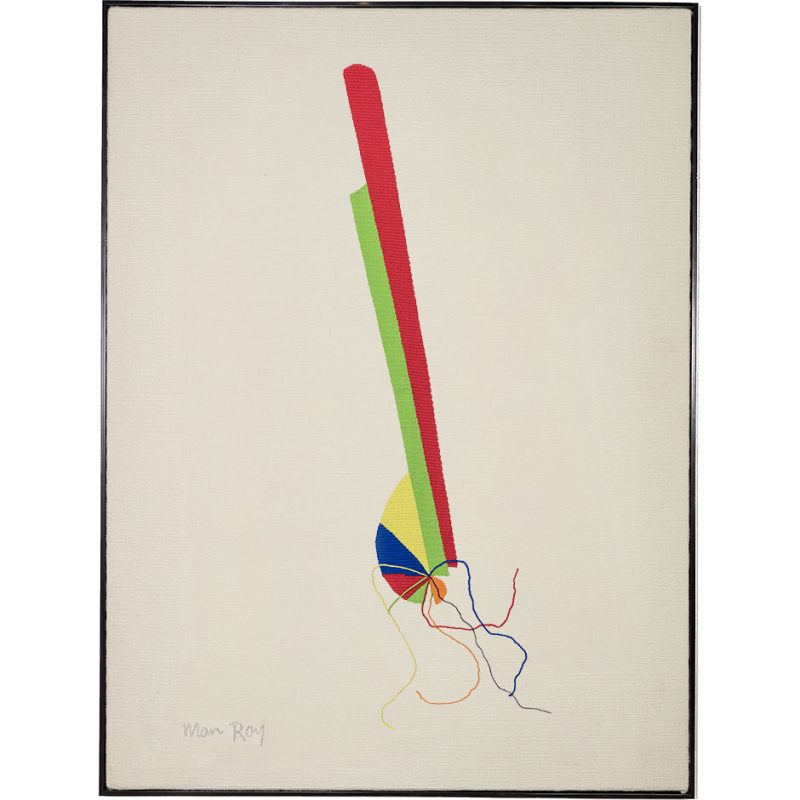
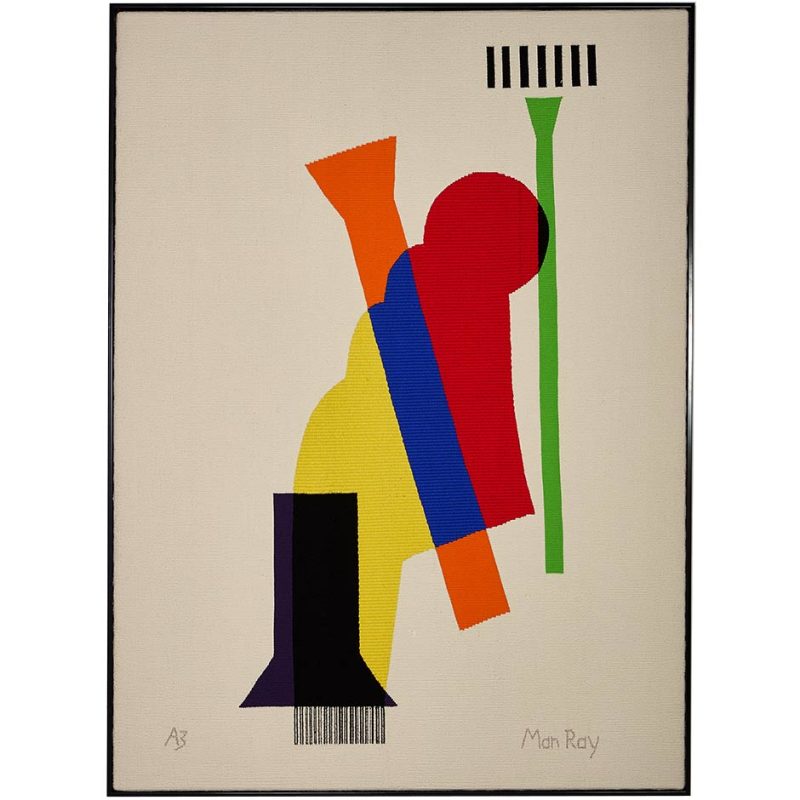
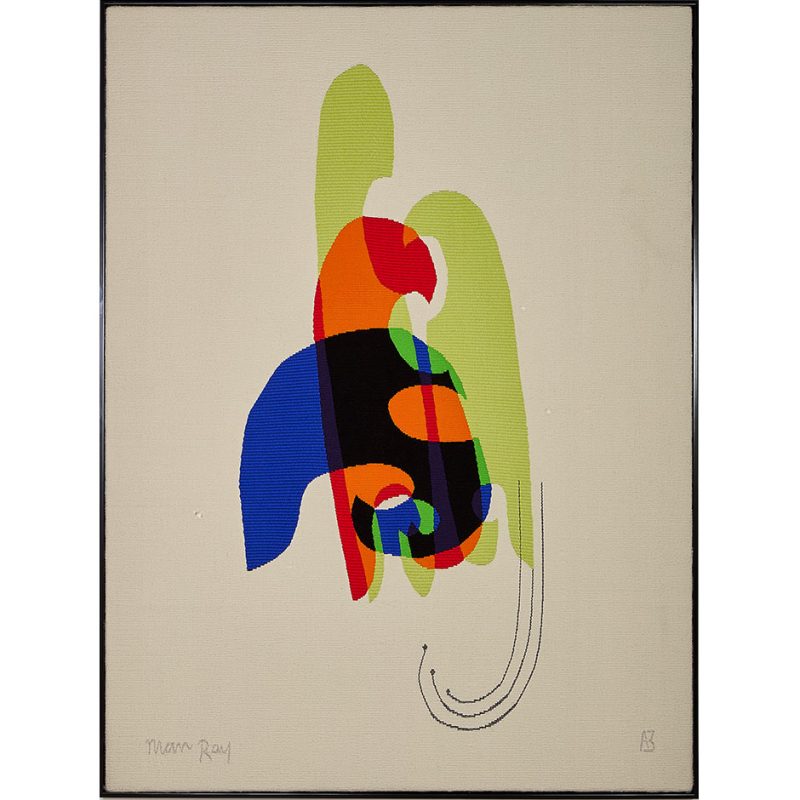
In 1972, Man Ray collaborated with Atelier 3, a Parisian tapestry workshop founded by Frédérique Bachellerie and Peter Schönwald, to translate his Revolving Doors series into tapestries. Based on a set of colorful paper collages he created in 1916, this series of ten tapestries exemplifies his modernist vision. The works feature bold geometric patterns, vivid colors, and abstract forms, seamlessly blending traditional textile craftsmanship with his avant-garde aesthetic.
Notable tapestries from the Revolving Doors series include “Legend“, “Long Distance” and “Orchestra” . These pieces, woven under Man Ray’s supervision, embody his innovative approach to bridging fine art and functional design. The collaboration with Atelier 3 also exemplifies the enduring appeal of his work, as the studio has since worked with over 100 artists but considers its partnership with Man Ray one of its most significant contributions to the art world.
Modern Representation and Legacy: The Role of Modern Masters Tapestries Gallery
Recently, Modern Masters Tapestries Gallery has secured an exclusive collaboration with Atelier 3, giving them the opportunity to showcase Man Ray’s textile works. At The Winter Show 2025, the gallery presented Legend, one of the iconic tapestries from the Revolving Doors series, underscoring the timeless appeal of his designs. This collaboration highlights Modern Masters Tapestries Gallery’s dedication to preserving and promoting the legacy of modern artists who innovatively merged traditional craftsmanship with avant-garde art.
The Artistic Vision Behind the Tapestries
Man Ray’s tapestries align with his broader philosophy of blurring the boundaries between fine art and functional design. His ability to repurpose everyday materials into strikingly modern compositions elevated them to the realm of high art. The abstraction in his works, characterized by geometric forms such as circles, lines, and amorphous shapes, invites multiple interpretations, challenging the viewer’s perception. These textiles were even incorporated into advertising and inspired other artists, amplifying their cultural and artistic impact.
A Lasting Inspiration
Man Ray’s collaboration with Atelier 3 and the exclusive representation by Modern Masters Tapestries Gallery continue to inspire contemporary artists and collectors. His Revolving Doors series stands as a testament to his ability to transcend the boundaries of traditional artistic mediums, creating thought-provoking works that endure as icons of creativity. By bridging art, craft, and functionality, Man Ray’s legacy in textile art remains a profound source of inspiration today.