
Tom Wesselmann
Modern Masters Tapestries selection by Didier Marien
Learn more about the artist
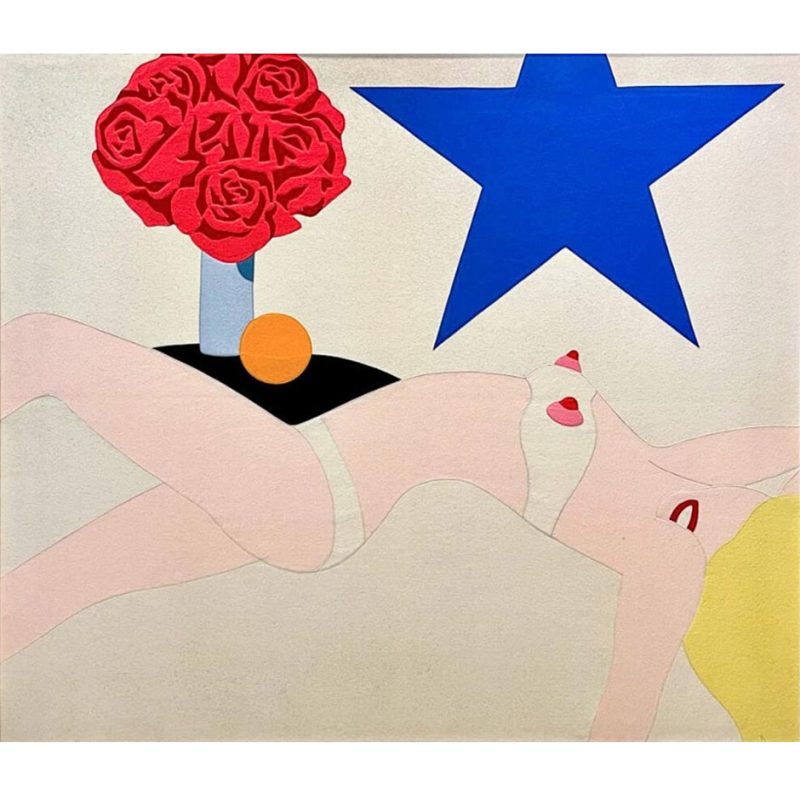
Tom Wesselmann Tapestries and Rugs
The Modern Masters Tapestries Gallery is thrilled to introduce a captivating collection of tapestries and rugs, infused with the artistic genius of Tom Wesselmann.
Tom Wesselmann’s artistic journey began at Hiram College, where he pursued studies until 1951. Following a brief stint in the army, he enrolled at the University of Cincinnati to study psychology. However, it was during this period that Wesselmann’s artistic inclination truly ignited, sparked by his exposure to the works of Robert Motherwell and Willem de Kooning at the Museum of Modern Art (MoMA).
In 1954, Wesselmann continued his artistic pursuits at the Art Academy of Cincinnati, and in 1956, he transferred to the Cooper Union for the Advancement of Science and Art in New York. It was during this time that he met Claire Selley, a fellow Cooper Union student who would become his muse and wife in 1963. Together, they raised three children.
Upon graduating in 1959, Wesselmann embarked on his artistic career, determined to forge a path distinct from the prevailing abstract trends of the time. He sought to reimagine traditional painting themes, exploring nudes, still lifes, interiors, and portraits. This endeavor allowed him to break free from Willem de Kooning’s strong influence and establish his own artistic identity.
Wesselmann’s signature style emerged through his innovative use of collage and juxtapositions. He fearlessly incorporated real objects and references from art history into his paintings, creating a unique visual language. While initially reluctant to embrace the term “Pop Art,” Wesselmann’s work became closely associated with the movement, and he frequently exhibited alongside fellow Pop artists.
In 1983, Wesselmann embarked on a new creative endeavor, conceptualizing the idea of translating line drawings into metal cutouts. These Steel Drawings, as they came to be known, featured lines directly cut from steel plates, often painted to enhance their visual impact. The stark contrast between the coldness of the metal and the fluidity of the lines, often representing nudes, created a striking visual dialogue. While the idea had originated earlier, Wesselmann had to wait for advancements in laser-cutting technology to bring his vision to life.
Towards the end of his life, Wesselmann’s artistic journey took an unexpected turn as he revisited abstraction, yet without abandoning the figurative elements that had characterized his work. This exploration demonstrated his artistic versatility and his willingness to continuously evolve his creative expression.
Despite his international acclaim and numerous exhibitions abroad, Wesselmann did not receive a major retrospective exhibition in North America until 2012, when the Montreal Museum of Fine Arts honored his legacy. In 2018, the New National Museum of Monaco (Villa Paloma) further recognized Wesselmann’s contributions with a retrospective titled “The Promise of Happiness.”
Wesselmann’s artistic legacy extends beyond his paintings. In 1980, he published an essay under the pseudonym Slim Stealingworth, providing valuable insights into his artistic development. This publication played a significant role in raising his profile, particularly in Asia and Europe.