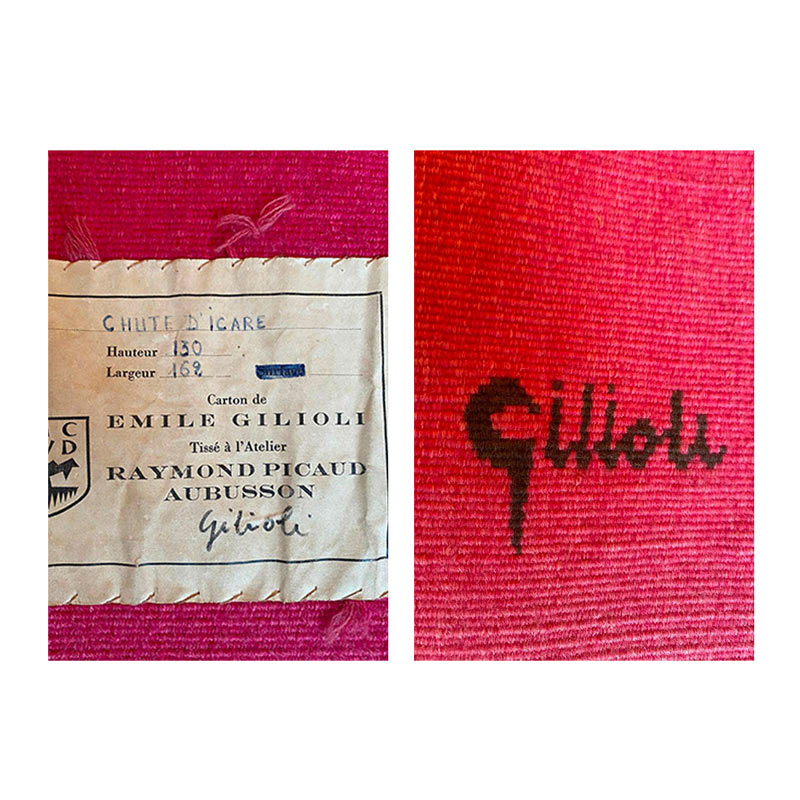
Chute d’Icare
Dimensions: 51 x 64 in. (130 x 162 cm)
Material: Wool tapestry woven at the Atelier Raymond Picaud Aubusson.
Artist signature: Lower right
Date: 1966
Serial: 2/3
Detailed information
Emile Gilioli “Chute d’Icare” Tapestry
A treasured Aubusson tapestry titled “Chute d’Icare” (The Fall of Icarus), meticulously crafted by the renowned French artist Emile Gilioli, graces our esteemed collection.
“Wool’s warmth appeals to me, and in tapestry, I can combine color and graphic design” Emile Gilioli proclaimed in his 1968 book “Sculpture”.
While primarily known as a sculptor, Gilioli embarked on tapestry design in 1949. His talent was recognized in 1957 when he won the Tapestry Prize at the São Paulo Biennial. Over his career, he produced around a hundred tapestries, woven by the prestigious Pinton and Picaud workshops.
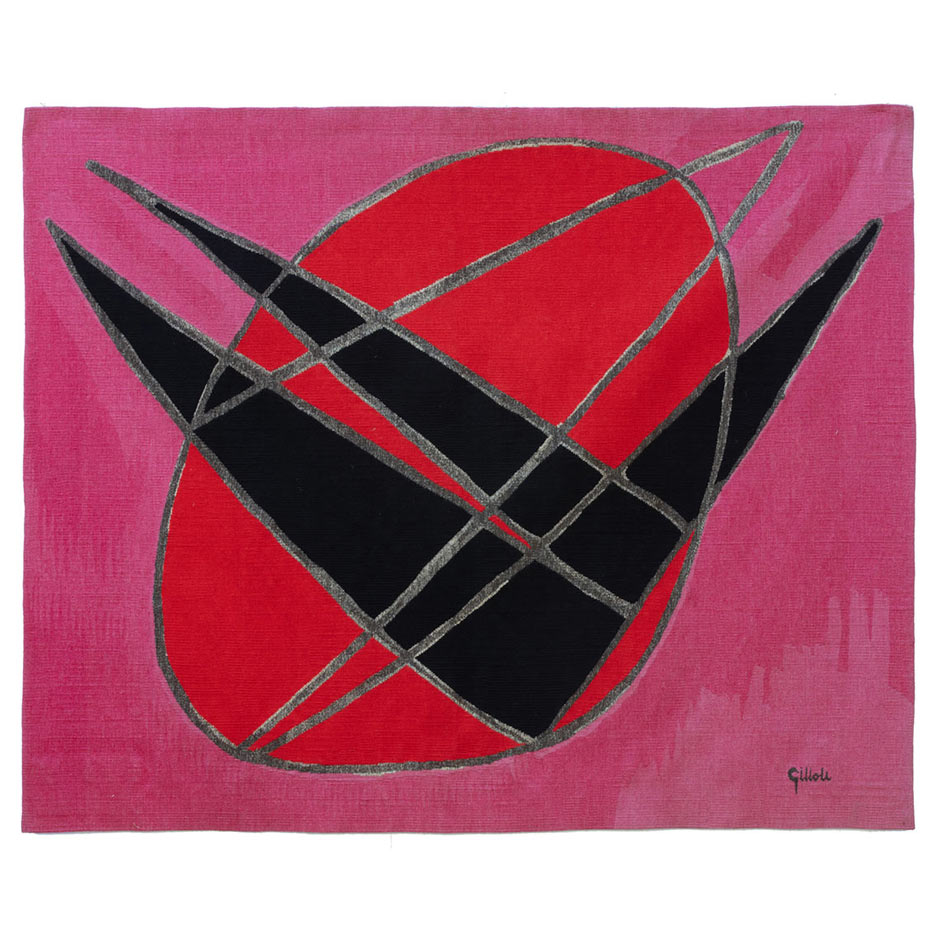
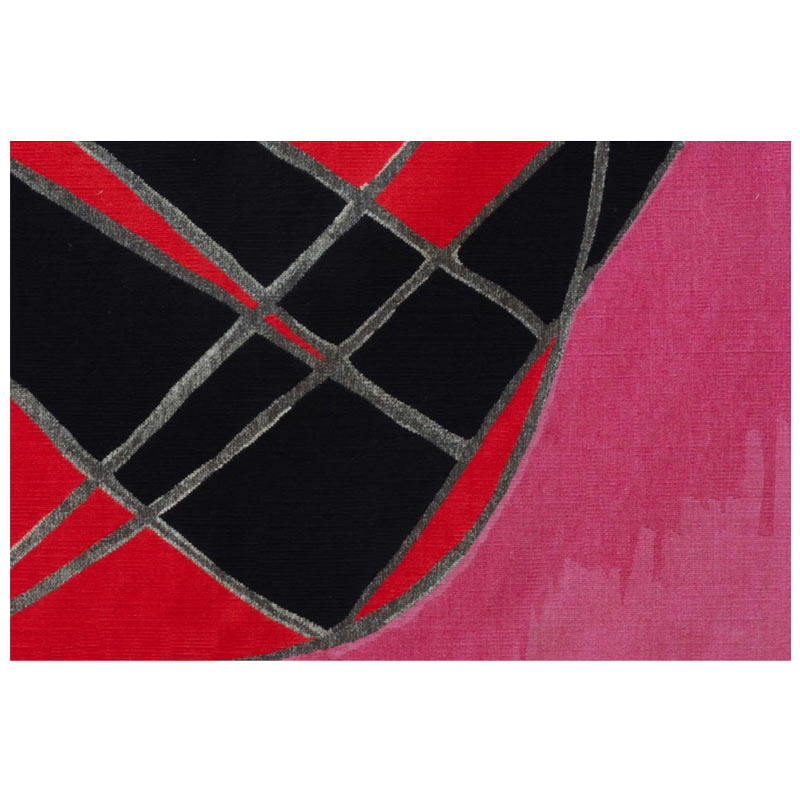
Created in 1966, this particular tapestry marks a turning point in Gilioli’s tapestry work. He moved away from the drawing-based cartoons of his early period and embraced a more abstract style. This tapestry features geometric rings, their mottled colors contrasting with the unexpected pink background. The background, initially perceived as uniform, reveals subtle shading reminiscent of melting wax, perhaps alluding to the fate of Icarus’s wings.
Detailed information
Emile Gilioli “Chute d’Icare” Tapestry
A treasured Aubusson tapestry titled “Chute d’Icare” (The Fall of Icarus), meticulously crafted by the renowned French artist Emile Gilioli, graces our esteemed collection.
“Wool’s warmth appeals to me, and in tapestry, I can combine color and graphic design” Emile Gilioli proclaimed in his 1968 book “Sculpture”.
While primarily known as a sculptor, Gilioli embarked on tapestry design in 1949. His talent was recognized in 1957 when he won the Tapestry Prize at the São Paulo Biennial. Over his career, he produced around a hundred tapestries, woven by the prestigious Pinton and Picaud workshops.
Created in 1966, this particular tapestry marks a turning point in Gilioli’s tapestry work. He moved away from the drawing-based cartoons of his early period and embraced a more abstract style. This tapestry features geometric rings, their mottled colors contrasting with the unexpected pink background. The background, initially perceived as uniform, reveals subtle shading reminiscent of melting wax, perhaps alluding to the fate of Icarus’s wings.