Jaune 9
Material: Handwoven wool rug
Dimensions : 115 x 230 cm – 45 x 90 in.
Date: circa 1940
Serial: 15/100
Detailed information
Fernand Léger “Jaune 9” Rug
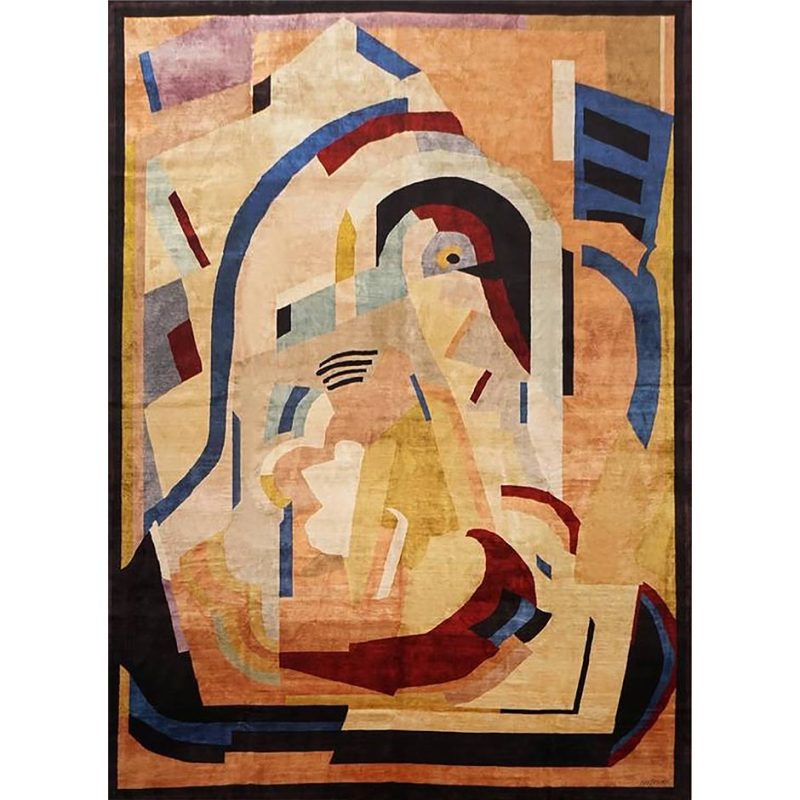
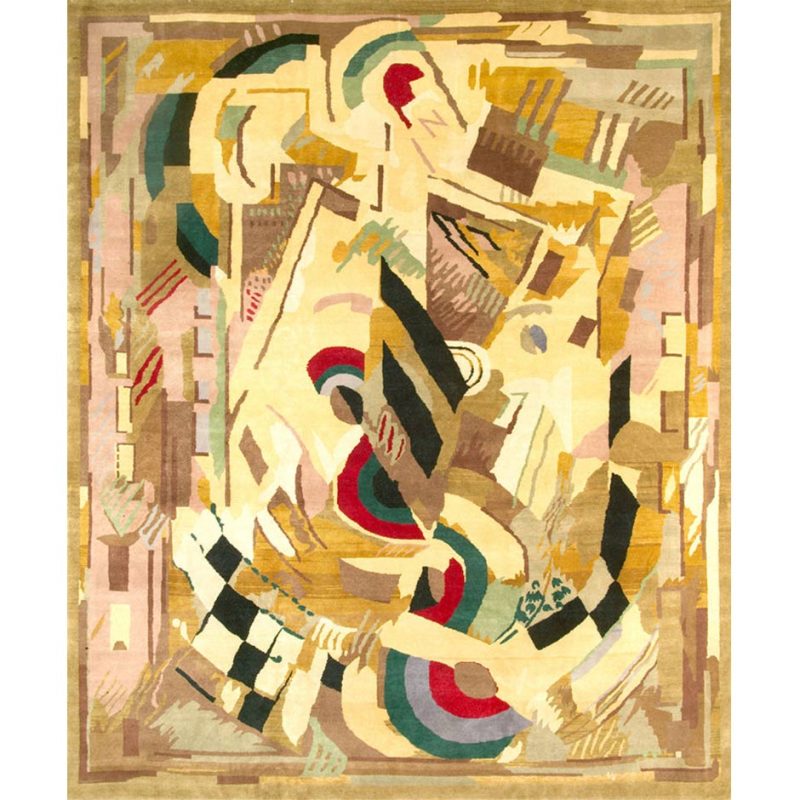
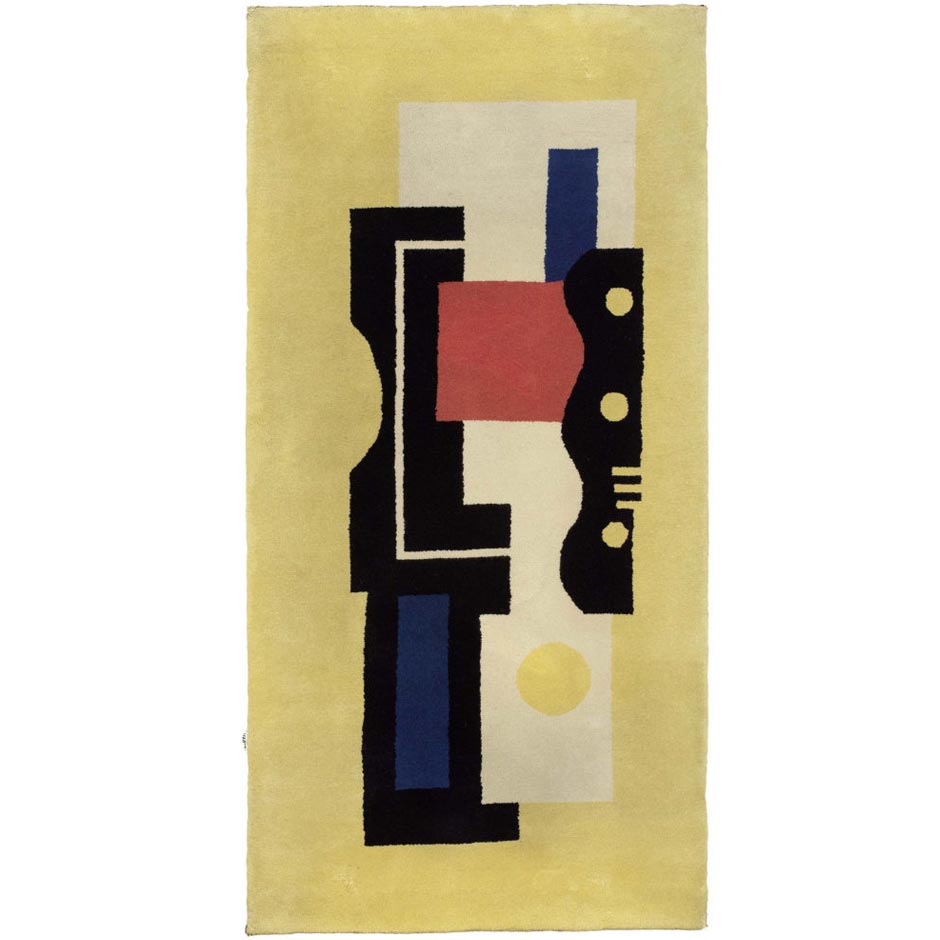
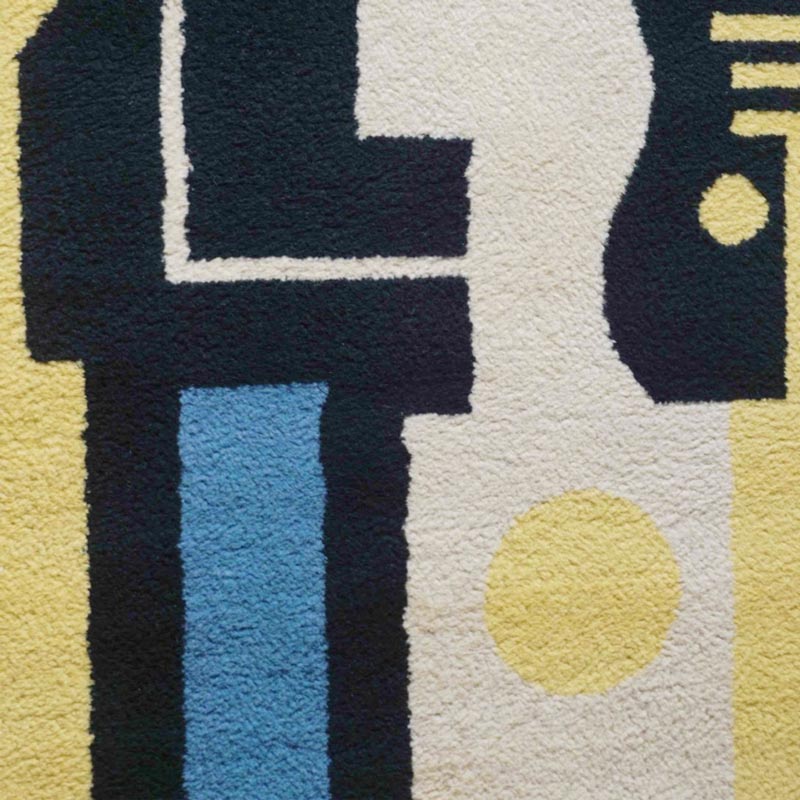
Fernand Léger’s “Jaune 9” (Yellow 9) rug is a colorful and geometric work of art. It features large, abstract shapes in black, red, blue, and white against a bright yellow background. The shapes are arranged in a dynamic and energetic manner, creating a sense of movement and excitement.
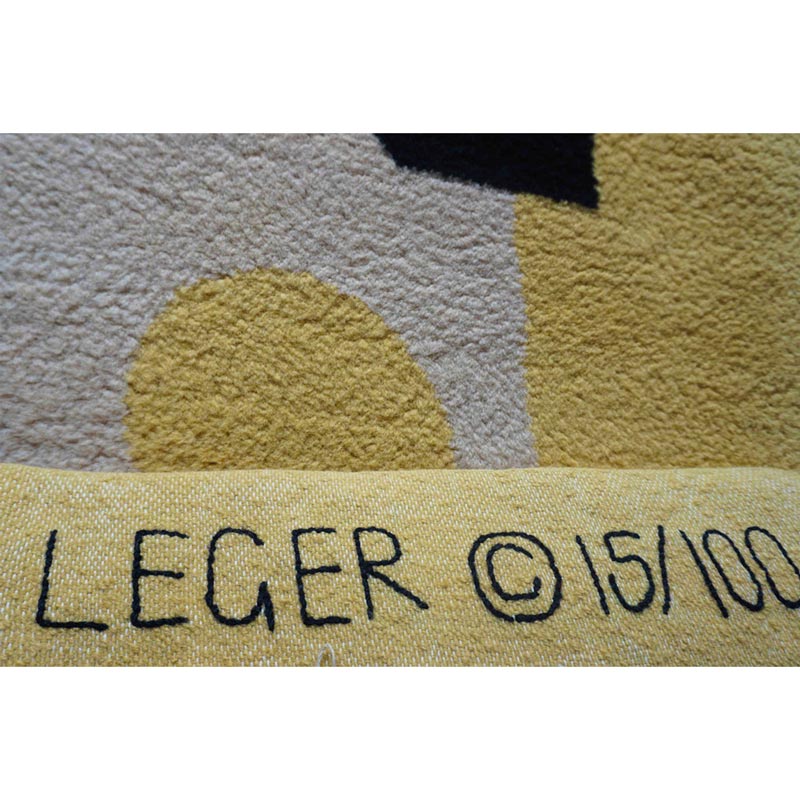
The rug is made of wool and measures 233 x 111.5 cm (91.7 x 43.9 in). It was created around 1940 and is signed and numbered 15/100.
Fernand Léger’s artistic vision was characterized by his fascination with modern life and technology. He was inspired by the machine age and its impact on society, and he sought to capture the energy and dynamism of modern life in his art. He often used bold colors, geometric shapes, and simplified forms to create a sense of movement and excitement.
Léger was also interested in the relationship between art and everyday life. He believed that art should be accessible to everyone, and he incorporated elements of popular culture, such as advertising and cartoons, into his work. He also experimented with new materials and techniques, such as welding and assemblage, in order to create a more dynamic and interactive form of art.
Detailed information
Fernand Léger “Jaune 9” Rug
Fernand Léger’s “Jaune 9” (Yellow 9) rug is a colorful and geometric work of art. It features large, abstract shapes in black, red, blue, and white against a bright yellow background. The shapes are arranged in a dynamic and energetic manner, creating a sense of movement and excitement.
The rug is made of wool and measures 233 x 111.5 cm (91.7 x 43.9 in). It was created around 1940 and is signed and numbered 15/100.
Fernand Léger’s artistic vision was characterized by his fascination with modern life and technology. He was inspired by the machine age and its impact on society, and he sought to capture the energy and dynamism of modern life in his art. He often used bold colors, geometric shapes, and simplified forms to create a sense of movement and excitement.
Léger was also interested in the relationship between art and everyday life. He believed that art should be accessible to everyone, and he incorporated elements of popular culture, such as advertising and cartoons, into his work. He also experimented with new materials and techniques, such as welding and assemblage, in order to create a more dynamic and interactive form of art.