Silence habité
Dimensions: 68 x 80 in (172 × 204 cm)
Material: Handwoven wool tapestry by Atelier Raymond Picaud, Aubusson France
Artist signature: Signed, numbered “1/6” and the Ateliers mark embroidered on the underside; Titled “Silence habité” on the Bolduc
Serial: 1/6
Condition: Good Condition
Detailed information
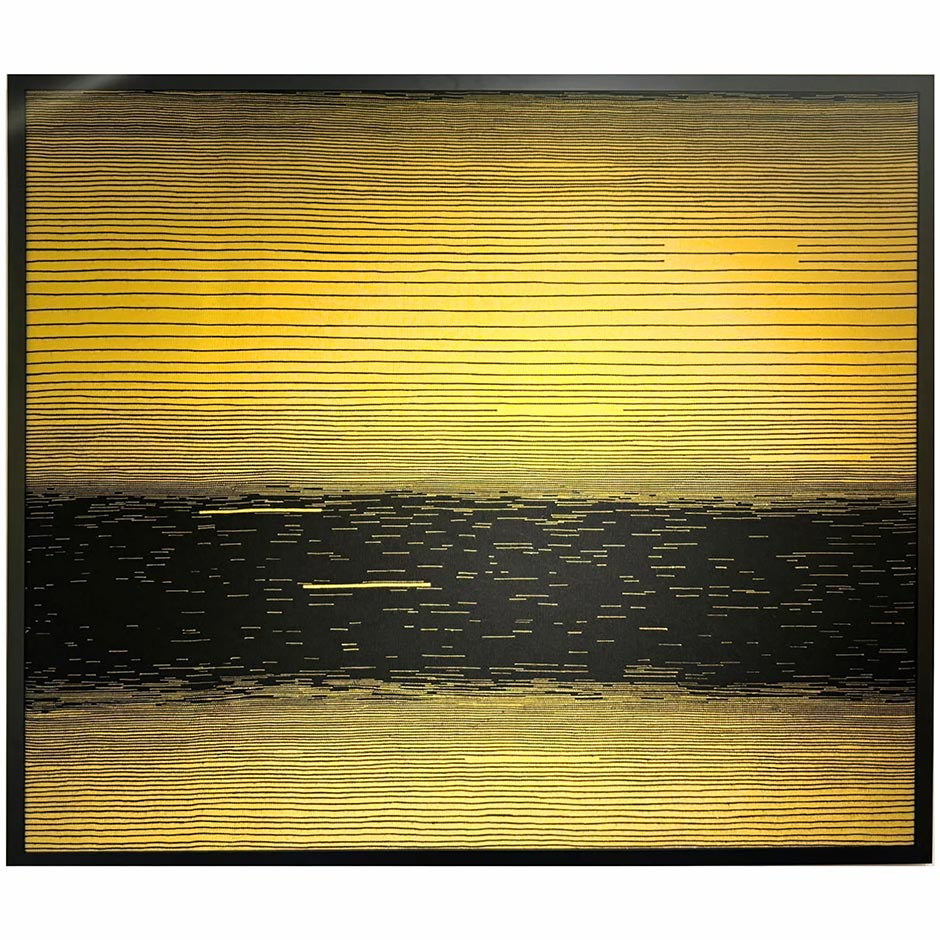
Michel Seuphor “Silence habité” Tapestry
Modern Masters Tapestrie Gallery is thrilled to present Michel Seuphor’s Silence habité. This magnificent tapestry exemplifies Seuphor’s renowned artistic vision and stands as a crowning achievement of her career.
In 1934, Seuphor and his wife abruptly left Paris for a “spiritual retreat” in southern France that lasted 14 years, including a period of activity in the Belgian Resistance. After their return in 1948, Seuphor emerged as a preeminent chronicler of European abstraction, drawing on his experiences, convictions, and remarkable memory to publish over a dozen books on modern painting and sculpture.
In this period, Seuphor created what he termed “lacuna drawings” – complex, intricate pen-and-ink designs featuring horizontal lines and blank spaces. From this interplay of lines and negative space emerged abstract forms that evoked deeper, intangible truths. The inspiration struck in 1951 while he was working on a landmark Mondrian biography, as Seuphor sought to apply the painter’s philosophy of horizontality and verticality to his own work.
Detailed information
Michel Seuphor “Silence habité” Tapestry
Modern Masters Tapestrie Gallery is thrilled to present Michel Seuphor’s Silence habité. This magnificent tapestry exemplifies Seuphor’s renowned artistic vision and stands as a crowning achievement of her career.
In 1934, Seuphor and his wife abruptly left Paris for a “spiritual retreat” in southern France that lasted 14 years, including a period of activity in the Belgian Resistance. After their return in 1948, Seuphor emerged as a preeminent chronicler of European abstraction, drawing on his experiences, convictions, and remarkable memory to publish over a dozen books on modern painting and sculpture.
In this period, Seuphor created what he termed “lacuna drawings” – complex, intricate pen-and-ink designs featuring horizontal lines and blank spaces. From this interplay of lines and negative space emerged abstract forms that evoked deeper, intangible truths. The inspiration struck in 1951 while he was working on a landmark Mondrian biography, as Seuphor sought to apply the painter’s philosophy of horizontality and verticality to his own work.