
Boglar
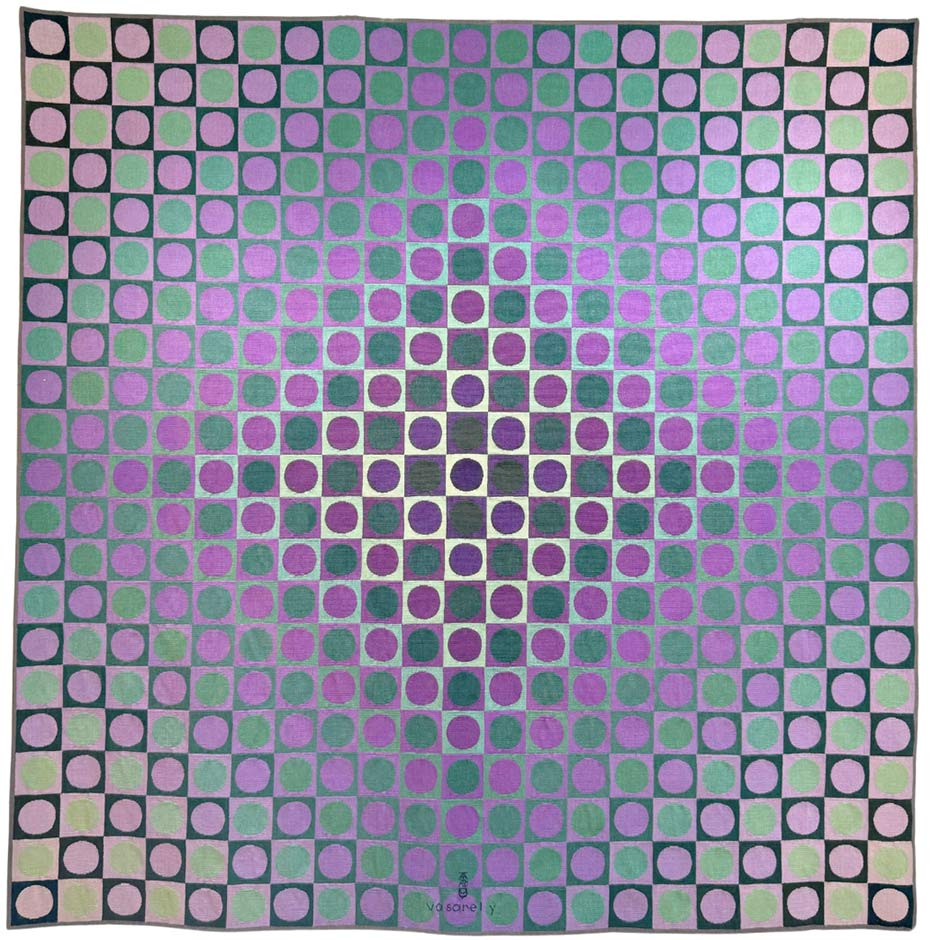
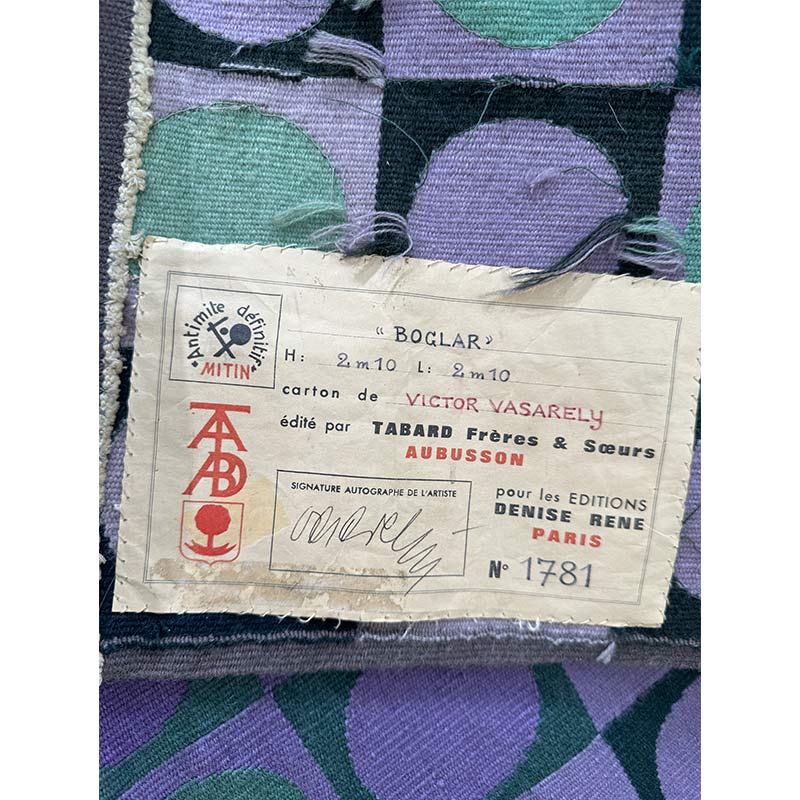
Material: Handwoven Aubusson tapestry in polychrome Wool by Tabard Frères et Soeurs
Dimensions : 210 x 210 cm – 82 × 82 in
Date: c. 1970s
Signed: Signature of the artist on bolduc
Condition Report: Perfect/Original condition
Detailed information
Victor Vasarely “Boglar” Tapestry
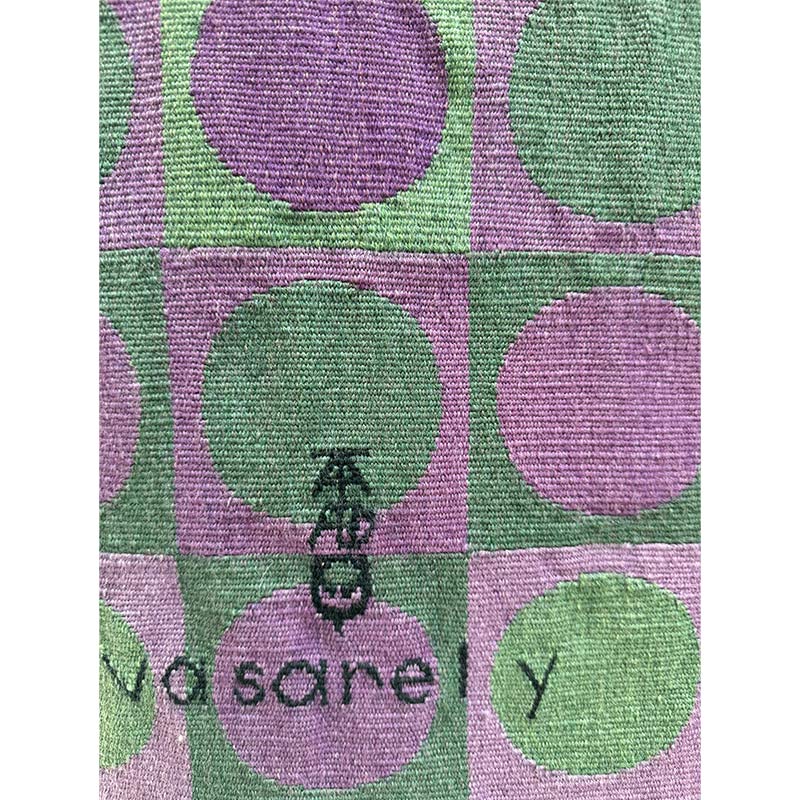
The Modern Masters Tapestries Gallery is thrilled to unveil a cornerstone of its exceptional collection: the exquisite “Boglar” tapestry by Victor Vasarely. This captivating work stands as a testament to Vasarely’s artistic genius, showcasing his signature style characterized by vibrant hues and a masterful interplay of geometric forms.
Victor Vasarely is considered a pioneer of the Op Art movement, which emerged in the 1960s. Op Art (short for Optical Art) focuses on creating visual illusions through the use of geometric shapes, patterns, and contrasting colors. These elements can trick the eye into perceiving movement, vibration, or a sense of depth within a static image.
Vasarely’s works heavily feature geometric shapes like squares, circles, and lines. He often arranges these shapes in repetitive patterns that create a sense of order and harmony. The “Boglar” tapestry likely reflects this geometric abstraction style.
Vasarely is known for his use of bold and contrasting colors. These colors play a crucial role in creating the optical effects and sense of dynamism in his works.
“This is another early tapestry by Vasarely in fantastic condition. The colors are nicely saturated and the weaving is clean – it is an extraordinary piece.”
Didier Marien
Detailed information
Victor Vasarely “Boglar” Tapestry
The Modern Masters Tapestries Gallery is thrilled to unveil a cornerstone of its exceptional collection: the exquisite “Boglar” tapestry by Victor Vasarely. This captivating work stands as a testament to Vasarely’s artistic genius, showcasing his signature style characterized by vibrant hues and a masterful interplay of geometric forms.
Victor Vasarely is considered a pioneer of the Op Art movement, which emerged in the 1960s. Op Art (short for Optical Art) focuses on creating visual illusions through the use of geometric shapes, patterns, and contrasting colors. These elements can trick the eye into perceiving movement, vibration, or a sense of depth within a static image.
Vasarely’s works heavily feature geometric shapes like squares, circles, and lines. He often arranges these shapes in repetitive patterns that create a sense of order and harmony. The “Boglar” tapestry likely reflects this geometric abstraction style.
Vasarely is known for his use of bold and contrasting colors. These colors play a crucial role in creating the optical effects and sense of dynamism in his works.
“This is another early tapestry by Vasarely in fantastic condition. The colors are nicely saturated and the weaving is clean – it is an extraordinary piece.”
Didier Marien